
Alexa Weik von Mossner is an assistant professor of American studies at the University of Klagenfurt in Austria. She has published widely on cosmopolitanism and various ecocritical issues in literature and film. Her most recent monograph is Cosmopolitan Minds: Literature, Emotion, and the Transnational Imagination (2014).
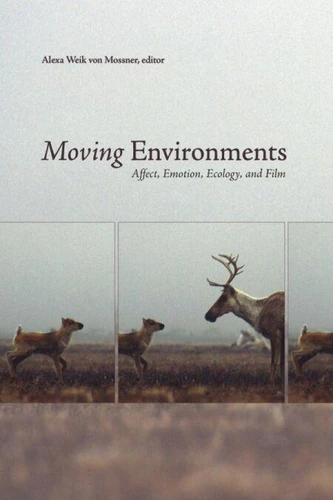
Moving Environments. Affect, Emotion, Ecology, and Film
Par :Formats :
Disponible dans votre compte client Decitre ou Furet du Nord dès validation de votre commande. Le format ePub est :
- Compatible avec une lecture sur My Vivlio (smartphone, tablette, ordinateur)
- Compatible avec une lecture sur liseuses Vivlio
- Pour les liseuses autres que Vivlio, vous devez utiliser le logiciel Adobe Digital Edition. Non compatible avec la lecture sur les liseuses Kindle, Remarkable et Sony
 , qui est-ce ?
Notre partenaire de plateforme de lecture numérique où vous retrouverez l'ensemble de vos ebooks gratuitement
Pour en savoir plus sur nos ebooks, consultez notre aide en ligne ici
C'est si simple ! Lisez votre ebook avec l'app Vivlio sur votre tablette, mobile ou ordinateur :

- Nombre de pages296
- FormatePub
- ISBN978-1-77112-004-3
- EAN9781771120043
- Date de parution07/10/2014
- Protection num.Digital Watermarking
- Taille2 Mo
- Infos supplémentairesepub
- ÉditeurWilfrid Laurier University Press
Résumé
In Moving Environments: Affect, Emotion, Ecology, and Film, international scholars investigate how films portray human emotional relationships with the more-than-human world and how such films act upon their viewers' emotions. Emotion and affect are the basic mechanisms that connect us to our environment, shape our knowledge, and motivate our actions. Contributors explore how film represents and shapes human emotion in relation to different environments and what role time, place, and genre play in these affective processes.
Individual essays resituate well-researched environmental films such as An Inconvenient Truth and March of the Penguins by paying close attention to their emotionalizing strategies, and bring to our attention the affective qualities of films that have so far received little attention from ecocritics, such as Stan Brakhage's Dog Star Man. The collection opens a new discursive space at the disciplinary intersection of film studies, affect studies, and a growing body of ecocritical scholarship.
It will be of interest not only to scholars and students working in the field of ecocriticism and the environmental humanities, but for everyone with an interest in our emotional responses to film.
Individual essays resituate well-researched environmental films such as An Inconvenient Truth and March of the Penguins by paying close attention to their emotionalizing strategies, and bring to our attention the affective qualities of films that have so far received little attention from ecocritics, such as Stan Brakhage's Dog Star Man. The collection opens a new discursive space at the disciplinary intersection of film studies, affect studies, and a growing body of ecocritical scholarship.
It will be of interest not only to scholars and students working in the field of ecocriticism and the environmental humanities, but for everyone with an interest in our emotional responses to film.