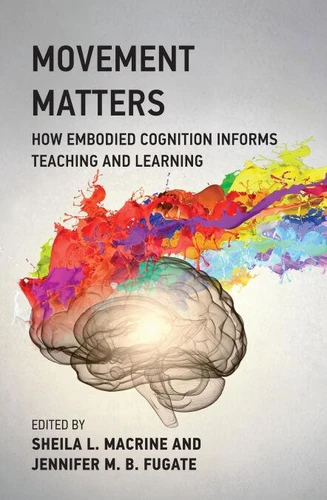
Movement Matters. How Embodied Cognition Informs Teaching and Learning
Par : ,Formats :
Disponible dans votre compte client Decitre ou Furet du Nord dès validation de votre commande. Le format ePub protégé est :
- Compatible avec une lecture sur My Vivlio (smartphone, tablette, ordinateur)
- Compatible avec une lecture sur liseuses Vivlio
- Pour les liseuses autres que Vivlio, vous devez utiliser le logiciel Adobe Digital Edition. Non compatible avec la lecture sur les liseuses Kindle, Remarkable et Sony
- Non compatible avec un achat hors France métropolitaine
 , qui est-ce ?
Notre partenaire de plateforme de lecture numérique où vous retrouverez l'ensemble de vos ebooks gratuitement
Pour en savoir plus sur nos ebooks, consultez notre aide en ligne ici
C'est si simple ! Lisez votre ebook avec l'app Vivlio sur votre tablette, mobile ou ordinateur :

- Nombre de pages350
- FormatePub
- ISBN978-0-262-36898-8
- EAN9780262368988
- Date de parution19/04/2022
- Protection num.Adobe DRM
- Taille21 Mo
- Infos supplémentairesepub
- ÉditeurThe MIT Press
Résumé
Experts translate the latest findings on embodied cognition from neuroscience, psychology, and cognitive science to inform teaching and learning pedagogy. Embodied cognition represents a radical shift in conceptualizing cognitive processes, in which cognition develops through mind-body environmental interaction. If this supposition is correct, then the conventional style of instruction-in which students sit at desks, passively receiving information-needs rethinking.
Movement Matters considers the educational implications of an embodied account of cognition, describing the latest research applications from neuroscience, psychology, and cognitive science and demonstrating their relevance for teaching and learning pedagogy. The contributors cover a range of content areas, explaining how the principles of embodied cognition can be applied in classroom settings. After a discussion of the philosophical and theoretical underpinnings of embodied cognition, contributors describe its applications in language, including the areas of handwriting, vocabulary, language development, and reading comprehension; STEM areas, emphasizing finger counting and the importance of hand and body gestures in understanding physical forces; and digital learning technologies, including games and augmented reality.
Finally, they explore embodied learning in the social-emotional realm, including how emotional granularity, empathy, and mindfulness benefit classroom learning. Movement Matters introduces a new model, translational learning sciences research, for interpreting and disseminating the latest empirical findings in the burgeoning field of embodied cognition. The book provides an up-to-date, inclusive, and essential resource for those involved in educational planning, design, and pedagogical approaches. ContributorsDor Abrahamson, Martha W.
Alibali, Petra A. Arndt, Lisa Aziz-Zadeh, Jo Boaler, Christiana Butera, Rachel S. Y. Chen, Charles P. Davis, Andrea Marquardt Donovan, Inge-Marie Eigsti, Virginia J. Flood, Jennifer M. B. Fugate, Arthur M. Glenberg, Ligia E. Gómez, Daniel D. Hutto, Karin H. James, Mina C. Johnson-Glenberg, Michael P. Kaschak, Markus Kiefer, Christina Krause, Sheila L. Macrine, Anne Mangen, Carmen Mayer, Amanda L. McGraw, Colleen Megowan-Romanowicz, Mitchell J.
Nathan, Antti Pirhonen, Kelsey E. Schenck, Lawrence Shapiro, Anna Shvarts, Yue-Ting Siu, Sofia Tancredi, Chrystian Vieyra, Rebecca Vieyra, Candace Walkington, Christine Wilson-Mendenhall, Eiling Yee
Movement Matters considers the educational implications of an embodied account of cognition, describing the latest research applications from neuroscience, psychology, and cognitive science and demonstrating their relevance for teaching and learning pedagogy. The contributors cover a range of content areas, explaining how the principles of embodied cognition can be applied in classroom settings. After a discussion of the philosophical and theoretical underpinnings of embodied cognition, contributors describe its applications in language, including the areas of handwriting, vocabulary, language development, and reading comprehension; STEM areas, emphasizing finger counting and the importance of hand and body gestures in understanding physical forces; and digital learning technologies, including games and augmented reality.
Finally, they explore embodied learning in the social-emotional realm, including how emotional granularity, empathy, and mindfulness benefit classroom learning. Movement Matters introduces a new model, translational learning sciences research, for interpreting and disseminating the latest empirical findings in the burgeoning field of embodied cognition. The book provides an up-to-date, inclusive, and essential resource for those involved in educational planning, design, and pedagogical approaches. ContributorsDor Abrahamson, Martha W.
Alibali, Petra A. Arndt, Lisa Aziz-Zadeh, Jo Boaler, Christiana Butera, Rachel S. Y. Chen, Charles P. Davis, Andrea Marquardt Donovan, Inge-Marie Eigsti, Virginia J. Flood, Jennifer M. B. Fugate, Arthur M. Glenberg, Ligia E. Gómez, Daniel D. Hutto, Karin H. James, Mina C. Johnson-Glenberg, Michael P. Kaschak, Markus Kiefer, Christina Krause, Sheila L. Macrine, Anne Mangen, Carmen Mayer, Amanda L. McGraw, Colleen Megowan-Romanowicz, Mitchell J.
Nathan, Antti Pirhonen, Kelsey E. Schenck, Lawrence Shapiro, Anna Shvarts, Yue-Ting Siu, Sofia Tancredi, Chrystian Vieyra, Rebecca Vieyra, Candace Walkington, Christine Wilson-Mendenhall, Eiling Yee