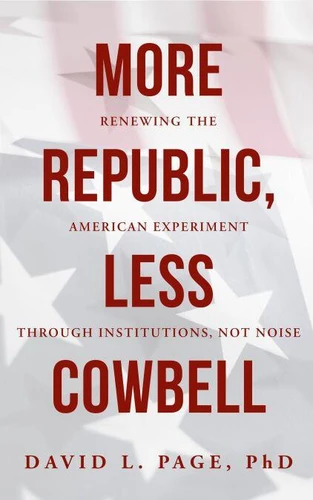
American democracy feels louder than ever-and less capable of governing. The problem is not passion. The problem is mediation. In More Republic, Less Cowbell, David L. Page argues that modern American politics did not break because citizens stopped caring or leaders lost virtue. The system broke because the institutions designed to convert conflict into law were quietly dismantled. Political parties lost their gatekeeping role.
Congressional structures hollowed out. Journalism gave way to algorithmic outrage. The result is a permanent campaign fueled by noise, grievance, and performance-without resolution. This book reframes polarization as a structural failure, not a moral one. Drawing on constitutional history, cognitive science, electoral reform, and original data analysis, Page traces how post-1968 reforms reshaped incentives across the Chamber, the Pipeline, and the Press-producing candidates optimized for motivation rather than governance, legislatures allergic to compromise, and citizens trapped in a feedback loop of anger without agency.
More Republic, Less Cowbell does not call for less democracy. It calls for better architecture. The book offers concrete, citizen-focused reforms to restore mediation, responsibility, and durability to self-government-without asking for purity, altruism, or blind trust. The American Republic still holds. The work remains unfinished. The next move belongs to the citizen.
American democracy feels louder than ever-and less capable of governing. The problem is not passion. The problem is mediation. In More Republic, Less Cowbell, David L. Page argues that modern American politics did not break because citizens stopped caring or leaders lost virtue. The system broke because the institutions designed to convert conflict into law were quietly dismantled. Political parties lost their gatekeeping role.
Congressional structures hollowed out. Journalism gave way to algorithmic outrage. The result is a permanent campaign fueled by noise, grievance, and performance-without resolution. This book reframes polarization as a structural failure, not a moral one. Drawing on constitutional history, cognitive science, electoral reform, and original data analysis, Page traces how post-1968 reforms reshaped incentives across the Chamber, the Pipeline, and the Press-producing candidates optimized for motivation rather than governance, legislatures allergic to compromise, and citizens trapped in a feedback loop of anger without agency.
More Republic, Less Cowbell does not call for less democracy. It calls for better architecture. The book offers concrete, citizen-focused reforms to restore mediation, responsibility, and durability to self-government-without asking for purity, altruism, or blind trust. The American Republic still holds. The work remains unfinished. The next move belongs to the citizen.


 , qui est-ce ?