
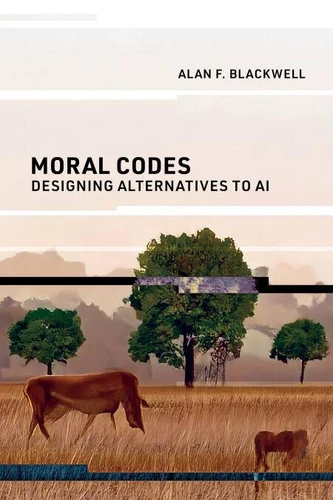
Moral Codes. Designing Alternatives to AI
Par :Formats :
Disponible dans votre compte client Decitre ou Furet du Nord dès validation de votre commande. Le format ePub protégé est :
- Compatible avec une lecture sur My Vivlio (smartphone, tablette, ordinateur)
- Compatible avec une lecture sur liseuses Vivlio
- Pour les liseuses autres que Vivlio, vous devez utiliser le logiciel Adobe Digital Edition. Non compatible avec la lecture sur les liseuses Kindle, Remarkable et Sony
- Non compatible avec un achat hors France métropolitaine
 , qui est-ce ?
Notre partenaire de plateforme de lecture numérique où vous retrouverez l'ensemble de vos ebooks gratuitement
Pour en savoir plus sur nos ebooks, consultez notre aide en ligne ici
C'est si simple ! Lisez votre ebook avec l'app Vivlio sur votre tablette, mobile ou ordinateur :

- Nombre de pages240
- FormatePub
- ISBN978-0-262-37921-2
- EAN9780262379212
- Date de parution06/08/2024
- Protection num.Adobe DRM
- Taille6 Mo
- Infos supplémentairesepub
- ÉditeurThe MIT Press
Résumé
We don't need more artificial intelligence-we need better programming languages to tell computers what we actually want them to do. Decades ago, we believed that robots and computers would take over all the boring jobs and drudgery, leaving humans to a life of leisure. This hasn't happened. Instead, humans are still doing boring jobs, and even worse, AI researchers have built technology that is creative, self-aware, and emotional-doing the tasks humans were supposed to enjoy.
How did we get here? In Moral Codes, Alan Blackwell argues that there is a fundamental flaw in the research agenda of artificial intelligence What humanity needs, Blackwell argues, is better ways to tell computers what we want them to do, with new and better programming languages: More Open Representations, Access to Learning, and Control Over Digital Expression-In other words, MORAL CODE. Blackwell draws on his deep experiences as a programming language designer-which he has been doing since 1983-to unpack fundamental principles of interaction design and explain their technical relationship to ideas of creativity and fairness.
Taking aim at software that constrains our conversations with strict word counts or infantilizes human interaction with likes and emojis, Blackwell shows how to design software that is better-not more efficient or more profitable, but better for society and better for all people. Covering recent research and the latest smart tools, Blackwell offers rich design principles for a better kind of software-and a better kind of world.
How did we get here? In Moral Codes, Alan Blackwell argues that there is a fundamental flaw in the research agenda of artificial intelligence What humanity needs, Blackwell argues, is better ways to tell computers what we want them to do, with new and better programming languages: More Open Representations, Access to Learning, and Control Over Digital Expression-In other words, MORAL CODE. Blackwell draws on his deep experiences as a programming language designer-which he has been doing since 1983-to unpack fundamental principles of interaction design and explain their technical relationship to ideas of creativity and fairness.
Taking aim at software that constrains our conversations with strict word counts or infantilizes human interaction with likes and emojis, Blackwell shows how to design software that is better-not more efficient or more profitable, but better for society and better for all people. Covering recent research and the latest smart tools, Blackwell offers rich design principles for a better kind of software-and a better kind of world.