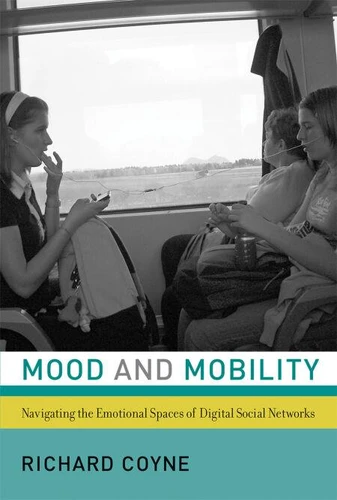
An argument that as we engage with social media on our digital devices we receive, modify, intensify, and transmit moods. We are active with our mobile devices; we play games, watch films, listen to music, check social media, and tap screens and keyboards while we are on the move. In Mood and Mobility, Richard Coyne argues that not only do we communicate, process information, and entertain ourselves through devices and social media; we also receive, modify, intensify, and transmit moods.
Designers, practitioners, educators, researchers, and users should pay more attention to the moods created around our smartphones, tablets, and laptops. Drawing on research from a range of disciplines, including experimental psychology, phenomenology, cultural theory, and architecture, Coyne shows that users of social media are not simply passive receivers of moods; they are complicit in making moods.
Devoting each chapter to a particular mood-from curiosity and pleasure to anxiety and melancholy-Coyne shows that devices and technologies do affect people's moods, although not always directly. He shows that mood effects are transitional; different moods suit different occasions, and derive character from emotional shifts. Furthermore, moods are active; we enlist all the resources of human sociability to create moods.
And finally, the discourse about mood is deeply reflexive; in a kind of meta-moodiness, we talk about our moods and have feelings about them. Mood, in Coyne's distinctive telling, provides a new way to look at the ever-changing world of ubiquitous digital technologies.
An argument that as we engage with social media on our digital devices we receive, modify, intensify, and transmit moods. We are active with our mobile devices; we play games, watch films, listen to music, check social media, and tap screens and keyboards while we are on the move. In Mood and Mobility, Richard Coyne argues that not only do we communicate, process information, and entertain ourselves through devices and social media; we also receive, modify, intensify, and transmit moods.
Designers, practitioners, educators, researchers, and users should pay more attention to the moods created around our smartphones, tablets, and laptops. Drawing on research from a range of disciplines, including experimental psychology, phenomenology, cultural theory, and architecture, Coyne shows that users of social media are not simply passive receivers of moods; they are complicit in making moods.
Devoting each chapter to a particular mood-from curiosity and pleasure to anxiety and melancholy-Coyne shows that devices and technologies do affect people's moods, although not always directly. He shows that mood effects are transitional; different moods suit different occasions, and derive character from emotional shifts. Furthermore, moods are active; we enlist all the resources of human sociability to create moods.
And finally, the discourse about mood is deeply reflexive; in a kind of meta-moodiness, we talk about our moods and have feelings about them. Mood, in Coyne's distinctive telling, provides a new way to look at the ever-changing world of ubiquitous digital technologies.


 , qui est-ce ?