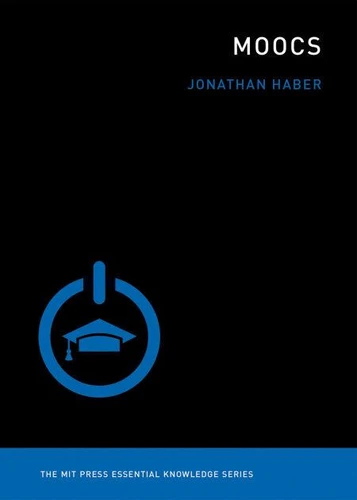
MOOCs
Par :Formats :
Disponible dans votre compte client Decitre ou Furet du Nord dès validation de votre commande. Le format ePub protégé est :
- Compatible avec une lecture sur My Vivlio (smartphone, tablette, ordinateur)
- Compatible avec une lecture sur liseuses Vivlio
- Pour les liseuses autres que Vivlio, vous devez utiliser le logiciel Adobe Digital Edition. Non compatible avec la lecture sur les liseuses Kindle, Remarkable et Sony
- Non compatible avec un achat hors France métropolitaine
 , qui est-ce ?
Notre partenaire de plateforme de lecture numérique où vous retrouverez l'ensemble de vos ebooks gratuitement
Pour en savoir plus sur nos ebooks, consultez notre aide en ligne ici
C'est si simple ! Lisez votre ebook avec l'app Vivlio sur votre tablette, mobile ou ordinateur :

- Nombre de pages248
- FormatePub
- ISBN978-0-262-32299-7
- EAN9780262322997
- Date de parution26/09/2014
- Protection num.Adobe DRM
- Taille697 Ko
- Infos supplémentairesepub
- ÉditeurThe MIT Press
Résumé
Everything you always wanted to know about MOOCs: an account of massive open online courses and what they might mean for the future of higher education. The New York Times declared 2012 to be "The Year of the MOOC" as millions of students enrolled in massive open online courses (known as MOOCs), millions of investment dollars flowed to the companies making them, and the media declared MOOCs to be earth-shaking game-changers in higher education.
During the inevitable backlash that followed, critics highlighted MOOCs' high dropout rate, the low chance of earning back initial investments, and the potential for any earth-shaking game change to make things worse instead of better. In this volume in the Essential Knowledge series, Jonathan Haber offers an account of MOOCs that avoids both hype and doomsaying. Instead, he provides an engaging, straightforward explanation of a rare phenomenon: an education innovation that captures the imagination of the public while moving at the speed of an Internet startup.
Haber explains the origins of MOOCs, what they consist of, the controversies surrounding them, and their possible future role in education. He proposes a new definition of MOOCs based on the culture of experimentation from which they emerged, and adds a student perspective-missing in most MOOC discussion. Haber's unique Degree of Freedom experiment, during which he attempted to learn the equivalent of a four-year liberal arts degree in one year using only MOOCs and other forms of free education, informs his discussion.
Haber urges us to avoid the fallacy of thinking that because MOOCs cannot solve all educational challenges they are not worth pursuing, and he helps us understand what MOOCs-despite their limitations-still offer the world. His book is required reading for anyone trying to sort out the competing claims, aspirations, and accusations that color the MOOC debate.
During the inevitable backlash that followed, critics highlighted MOOCs' high dropout rate, the low chance of earning back initial investments, and the potential for any earth-shaking game change to make things worse instead of better. In this volume in the Essential Knowledge series, Jonathan Haber offers an account of MOOCs that avoids both hype and doomsaying. Instead, he provides an engaging, straightforward explanation of a rare phenomenon: an education innovation that captures the imagination of the public while moving at the speed of an Internet startup.
Haber explains the origins of MOOCs, what they consist of, the controversies surrounding them, and their possible future role in education. He proposes a new definition of MOOCs based on the culture of experimentation from which they emerged, and adds a student perspective-missing in most MOOC discussion. Haber's unique Degree of Freedom experiment, during which he attempted to learn the equivalent of a four-year liberal arts degree in one year using only MOOCs and other forms of free education, informs his discussion.
Haber urges us to avoid the fallacy of thinking that because MOOCs cannot solve all educational challenges they are not worth pursuing, and he helps us understand what MOOCs-despite their limitations-still offer the world. His book is required reading for anyone trying to sort out the competing claims, aspirations, and accusations that color the MOOC debate.