Éric Percheron is a research associate at IRIS, specializing in financial compliance and financial security issues (anti-money laundering, analysis of international flows and country risks). He has spent over thirty years in the French banking industry, both in operational and compliance functions. Over the past fifteen years, he has developed expertise in financial security and compliance in the broadest sense, first in France, then in supporting foreign banks in Eastern Europe and Russia.
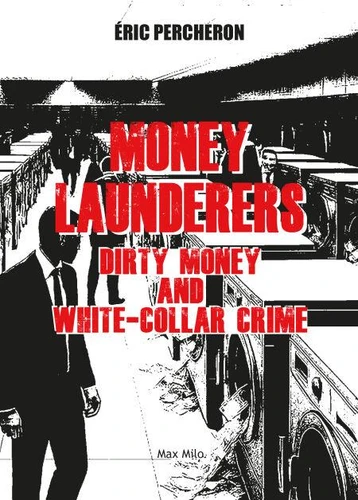
Money laundering. White-collar crime
Par :Formats :
Disponible dans votre compte client Decitre ou Furet du Nord dès validation de votre commande. Le format ePub protégé est :
- Compatible avec une lecture sur My Vivlio (smartphone, tablette, ordinateur)
- Compatible avec une lecture sur liseuses Vivlio
- Pour les liseuses autres que Vivlio, vous devez utiliser le logiciel Adobe Digital Edition. Non compatible avec la lecture sur les liseuses Kindle, Remarkable et Sony
- Non compatible avec un achat hors France métropolitaine
 , qui est-ce ?
Notre partenaire de plateforme de lecture numérique où vous retrouverez l'ensemble de vos ebooks gratuitement
Pour en savoir plus sur nos ebooks, consultez notre aide en ligne ici
C'est si simple ! Lisez votre ebook avec l'app Vivlio sur votre tablette, mobile ou ordinateur :

- Nombre de pages232
- FormatePub
- ISBN978-2-315-02450-6
- EAN9782315024506
- Date de parution22/01/2026
- Protection num.Adobe DRM
- Taille2 Mo
- Infos supplémentairesepub
- ÉditeurMax Milo
Résumé
Money laundering accounts for 3% of global GDP ($3, 000 billion). If it were a country, it would be the world's 8th largest, equivalent to the UK's GDP. The aim of this essay is to describe the mechanisms by which money is laundered, in particular the two main "schools" of fraud: financial flows and capital ownership. It also explores the demonetization of fraud, via the art market, real estate in London and the Alps, and the luxury watch market, which illustrate both the agility of fraudsters and the systematic lag of the authorities in the fight against fraud.
The author also aims to establish the link between fraud, money laundering and the despoiling of populations. And between money laundering and the financing of terrorism. He points to the irresponsibility of politicians and financial institutions, who, through blindness or amorality, allow this white-collar fraud to flourish. Every year, financial entities prefer to pay out over 10 billion dollars rather than control the phenomenon.
Faced with the internationalization of fraud, which amplifies the distortion between supposedly friendly states and the impunity of criminals, it is vital to strengthen international cooperation between authorities if money laundering is to be curbed.
The author also aims to establish the link between fraud, money laundering and the despoiling of populations. And between money laundering and the financing of terrorism. He points to the irresponsibility of politicians and financial institutions, who, through blindness or amorality, allow this white-collar fraud to flourish. Every year, financial entities prefer to pay out over 10 billion dollars rather than control the phenomenon.
Faced with the internationalization of fraud, which amplifies the distortion between supposedly friendly states and the impunity of criminals, it is vital to strengthen international cooperation between authorities if money laundering is to be curbed.
A propos de Eric Percheron

Les blanchisseurs. Argent sale et cols blancs
Grand Format
21,90 €

Money laundering. White-collar crime
Grand Format
24,90 €