Money is so vital to us it is almost impossible to imagine a way of life that doesn't include it, yet for most of human history there was no such thing as money and even when it appeared, it rarely crossed the paths of ordinary people. Bartering surpluses can only get a society so far; if it is to become complex, productive and diverse it needs to take the next step and choose an item - perhaps fish-hooks, perhaps flint - to use as a 'medium of exchange' whose value is agreed and lasting over time and distance.
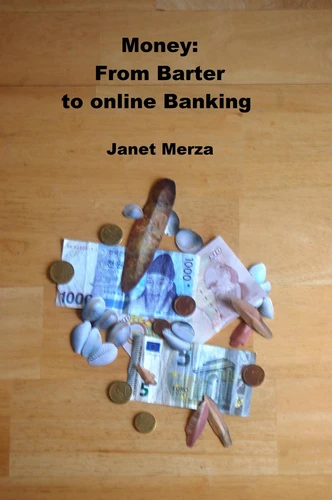
Many different items were used in this way but metal ones quickly become the mostly widely used and widely copied - becoming the coins we know today. This book traces the development of money from the earliest days of barter and gifting to the current situation when most money, for most of the time, is completely invisible to us. It shows how money influenced the ways societies developed and how that development in turn led to new financial initiatives and inventions, which in turn made new economic models possible.
It is not a book for economics experts or those with a specialised interest in coins - it is a book for the general reader who is interested in how the evolution of money and financial practices have shaped social history.
Money is so vital to us it is almost impossible to imagine a way of life that doesn't include it, yet for most of human history there was no such thing as money and even when it appeared, it rarely crossed the paths of ordinary people. Bartering surpluses can only get a society so far; if it is to become complex, productive and diverse it needs to take the next step and choose an item - perhaps fish-hooks, perhaps flint - to use as a 'medium of exchange' whose value is agreed and lasting over time and distance.
Many different items were used in this way but metal ones quickly become the mostly widely used and widely copied - becoming the coins we know today. This book traces the development of money from the earliest days of barter and gifting to the current situation when most money, for most of the time, is completely invisible to us. It shows how money influenced the ways societies developed and how that development in turn led to new financial initiatives and inventions, which in turn made new economic models possible.
It is not a book for economics experts or those with a specialised interest in coins - it is a book for the general reader who is interested in how the evolution of money and financial practices have shaped social history.


 , qui est-ce ?
