SOLDES
Jusqu'à -70% sur une sélection d'articles*

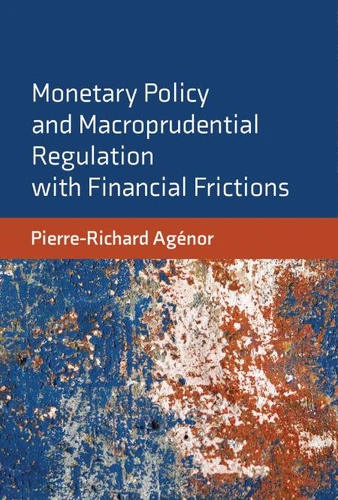
Monetary Policy and Macroprudential Regulation with Financial Frictions
Par :Formats :
Disponible dans votre compte client Decitre ou Furet du Nord dès validation de votre commande. Le format ePub protégé est :
- Compatible avec une lecture sur My Vivlio (smartphone, tablette, ordinateur)
- Compatible avec une lecture sur liseuses Vivlio
- Pour les liseuses autres que Vivlio, vous devez utiliser le logiciel Adobe Digital Edition. Non compatible avec la lecture sur les liseuses Kindle, Remarkable et Sony
- Non compatible avec un achat hors France métropolitaine
 , qui est-ce ?
Notre partenaire de plateforme de lecture numérique où vous retrouverez l'ensemble de vos ebooks gratuitement
Pour en savoir plus sur nos ebooks, consultez notre aide en ligne ici
C'est si simple ! Lisez votre ebook avec l'app Vivlio sur votre tablette, mobile ou ordinateur :

- Nombre de pages600
- FormatePub
- ISBN978-0-262-35942-9
- EAN9780262359429
- Date de parution10/11/2020
- Protection num.Adobe DRM
- Taille40 Mo
- Infos supplémentairesepub
- ÉditeurThe MIT Press
Résumé
An integrated analysis of how financial frictions can be accounted for in macroeconomic models built to study monetary policy and macroprudential regulation. Since the global financial crisis, there has been a renewed effort to emphasize financial frictions in designing closed- and open-economy macroeconomic models for monetary and macroprudential policy analysis. Drawing on the extensive literature of the past decade as well as his own contributions, in this book Pierre-Richard Agenor provides a unified set of theoretical and quantitative macroeconomic models with financial frictions to explore issues that have emerged in the wake of the crisis.
These include the need to understand better how the financial system amplifies and propagates shocks originating elsewhere in the economy; how it can itself be a source of aggregate fluctuations; the extent to which central banks should account for financial stability considerations in the conduct of monetary policy; whether national central banks and regulators should coordinate their policies to promote macroeconomic and financial stability; and how much countercyclical macroprudential policies should be coordinated at the international level to mitigate financial spillovers across countries.
These include the need to understand better how the financial system amplifies and propagates shocks originating elsewhere in the economy; how it can itself be a source of aggregate fluctuations; the extent to which central banks should account for financial stability considerations in the conduct of monetary policy; whether national central banks and regulators should coordinate their policies to promote macroeconomic and financial stability; and how much countercyclical macroprudential policies should be coordinated at the international level to mitigate financial spillovers across countries.