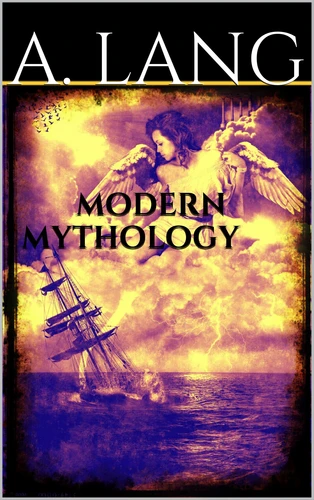
Modern Mythology
Par :Formats :
Disponible dans votre compte client Decitre ou Furet du Nord dès validation de votre commande. Le format ePub est :
- Compatible avec une lecture sur My Vivlio (smartphone, tablette, ordinateur)
- Compatible avec une lecture sur liseuses Vivlio
- Pour les liseuses autres que Vivlio, vous devez utiliser le logiciel Adobe Digital Edition. Non compatible avec la lecture sur les liseuses Kindle, Remarkable et Sony
 , qui est-ce ?
Notre partenaire de plateforme de lecture numérique où vous retrouverez l'ensemble de vos ebooks gratuitement
Pour en savoir plus sur nos ebooks, consultez notre aide en ligne ici
C'est si simple ! Lisez votre ebook avec l'app Vivlio sur votre tablette, mobile ou ordinateur :

- Nombre de pages226
- FormatePub
- ISBN978-3-7481-8895-7
- EAN9783748188957
- Date de parution21/01/2019
- Protection num.Digital Watermarking
- Taille641 Ko
- Infos supplémentairesepub
- ÉditeurBooks on Demand
Résumé
The archaeologist studies human life in its material remains; he tracks progress (and occasional degeneration) from the rudely chipped flints in the ancient gravel beds, to the polished stone weapon, and thence to the ages of bronze and iron. He is guided by material "survivals"-ancient arms, implements, and ornaments. The student of Institutions has a similar method. He finds his relics of the uncivilised past in agricultural usages, in archaic methods of allotment of land, in odd marriage customs, things rudimentary-fossil relics, as it were, of an early social and political condition.
The archaeologist and the student of Institutions compare these relics, material or customary, with the weapons, pottery, implements, or again with the habitual law and usage of existing savage or barbaric races, and demonstrate that our weapons and tools, and our laws and manners, have been slowly evolved out of lower conditions, even out of savage conditions. The anthropological method in mythology is the same.
In civilised religion and myth we find rudimentary survivals, fossils of rite and creed, ideas absolutely incongruous with the environing morality, philosophy, and science of Greece and India. Parallels to these things, so out of keeping with civilisation, we recognise in the creeds and rites of the lower races, even of cannibals; but there the creeds and rites are not incongruous with their environment of knowledge and culture.
There they are as natural and inevitable as the flint-headed spear or marriage by capture. We argue, therefore, that religions and mythical faiths and rituals which, among Greeks and Indians, are inexplicably incongruous have lived on from an age in which they were natural and inevitable, an age of savagery.
The archaeologist and the student of Institutions compare these relics, material or customary, with the weapons, pottery, implements, or again with the habitual law and usage of existing savage or barbaric races, and demonstrate that our weapons and tools, and our laws and manners, have been slowly evolved out of lower conditions, even out of savage conditions. The anthropological method in mythology is the same.
In civilised religion and myth we find rudimentary survivals, fossils of rite and creed, ideas absolutely incongruous with the environing morality, philosophy, and science of Greece and India. Parallels to these things, so out of keeping with civilisation, we recognise in the creeds and rites of the lower races, even of cannibals; but there the creeds and rites are not incongruous with their environment of knowledge and culture.
There they are as natural and inevitable as the flint-headed spear or marriage by capture. We argue, therefore, that religions and mythical faiths and rituals which, among Greeks and Indians, are inexplicably incongruous have lived on from an age in which they were natural and inevitable, an age of savagery.
A propos de Andrew Lang

3,49 €
3,49 €

Arabian Nights
E-book
3,99 €

3,49 €

Tales of Troy (Unabridged)
Audiobook
5,49 €

Summers Ending (Unabridged)
Audiobook
5,49 €

A Collection of Ballads (Unabridged)
Audiobook
5,49 €

4,49 €
4,99 €
4,49 €
The Blue Fairy Book
E-book
3,91 €

The World's Desire
E-book
6,99 €
4,22 €
4,22 €
1,99 €
1,99 €
1,99 €