SOLDES
Jusqu'à -70% sur une sélection d'articles*

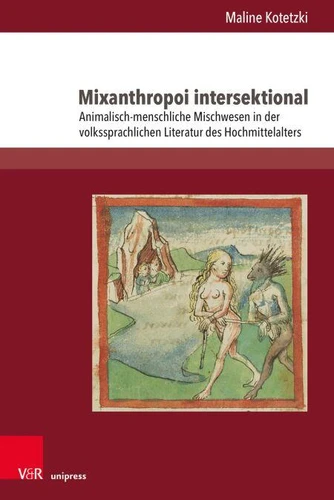
Mixanthropoi intersektional. Animalisch-menschliche Mischwesen in der volkssprachlichen Literatur des Hochmittelalters
Par :Formats :
Disponible dans votre compte client Decitre ou Furet du Nord dès validation de votre commande. Le format PDF est :
- Compatible avec une lecture sur My Vivlio (smartphone, tablette, ordinateur)
- Compatible avec une lecture sur liseuses Vivlio
- Pour les liseuses autres que Vivlio, vous devez utiliser le logiciel Adobe Digital Edition. Non compatible avec la lecture sur les liseuses Kindle, Remarkable et Sony
 , qui est-ce ?
Notre partenaire de plateforme de lecture numérique où vous retrouverez l'ensemble de vos ebooks gratuitement
Pour en savoir plus sur nos ebooks, consultez notre aide en ligne ici
C'est si simple ! Lisez votre ebook avec l'app Vivlio sur votre tablette, mobile ou ordinateur :

- Nombre de pages365
- FormatPDF
- ISBN978-3-8470-1777-6
- EAN9783847017776
- Date de parution20/01/2025
- Protection num.pas de protection
- Taille3 Mo
- Infos supplémentairespdf
- ÉditeurV&R Unipress
Résumé
Ungleichheitsstrukturen sind über viele Jahrhunderte historisch gewachsen. In literarischen Zeugnissen werden sie auf eine ganz eigene Art verhandelt. Daher lohnt sich ein Blick in literarische, volkssprachliche Quellen, um zu untersuchen, wie Ungleichheiten, Marginalisierungen und Stereotype dort thematisiert, entworfen und gegebenenfalls unterlaufen werden. Genau dies ist das Erkenntnisinteresse der vorliegenden Arbeit: Maline Kotetzki fragt nach narrativen Mustern bezüglich der Interaktionen zwischen der Dominanzgesellschaft und Außenseiter*innen am Beispiel von Mixanthropoi, also animalisch-menschlichen Mischwesen.
Der Intersektionalitätsansatz wird als ein Mittel herangezogen, um herauszufinden, welche Kategorien für die Einordnung der Figuren eine Rolle spielen und inwiefern sie ausschlaggebend für sowohl Diskriminierungen als auch Privilegierungen sind. Inequality structures have grown historically over many centuries. In literary testimonies, they are negotiated in a very unique way. It is therefore worth taking a look at literary, vernacular sources in order to examine how inequalities, marginalisation and stereotypes are thematised, designed and possibly undermined in them.
This is precisely the research interest of this thesis: Maline Kotetzki examines narrative patterns regarding the interactions between the dominant society and outsiders using the example of Mixanthropoi, i.e. animal-human hybrids. The intersectional approach is used as a means of finding out which categories play a role in the categorisation of the figures and to what extent they are decisive for both discrimination and privilege.
Der Intersektionalitätsansatz wird als ein Mittel herangezogen, um herauszufinden, welche Kategorien für die Einordnung der Figuren eine Rolle spielen und inwiefern sie ausschlaggebend für sowohl Diskriminierungen als auch Privilegierungen sind. Inequality structures have grown historically over many centuries. In literary testimonies, they are negotiated in a very unique way. It is therefore worth taking a look at literary, vernacular sources in order to examine how inequalities, marginalisation and stereotypes are thematised, designed and possibly undermined in them.
This is precisely the research interest of this thesis: Maline Kotetzki examines narrative patterns regarding the interactions between the dominant society and outsiders using the example of Mixanthropoi, i.e. animal-human hybrids. The intersectional approach is used as a means of finding out which categories play a role in the categorisation of the figures and to what extent they are decisive for both discrimination and privilege.