SOLDES
Jusqu'à -70% sur une sélection d'articles*

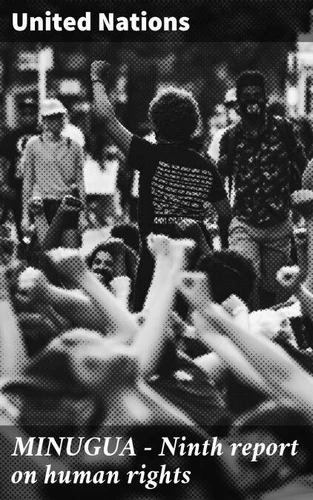
MINUGUA - Ninth report on human rights. Analyzing Human Rights Challenges in Guatemala: A Critical UN Report
Par :Formats :
Disponible dans votre compte client Decitre ou Furet du Nord dès validation de votre commande. Le format ePub est :
- Compatible avec une lecture sur My Vivlio (smartphone, tablette, ordinateur)
- Compatible avec une lecture sur liseuses Vivlio
- Pour les liseuses autres que Vivlio, vous devez utiliser le logiciel Adobe Digital Edition. Non compatible avec la lecture sur les liseuses Kindle, Remarkable et Sony
 , qui est-ce ?
Notre partenaire de plateforme de lecture numérique où vous retrouverez l'ensemble de vos ebooks gratuitement
Pour en savoir plus sur nos ebooks, consultez notre aide en ligne ici
C'est si simple ! Lisez votre ebook avec l'app Vivlio sur votre tablette, mobile ou ordinateur :

- Nombre de pages37
- FormatePub
- ISBN406-4-06-646808-8
- EAN4064066468088
- Date de parution10/04/2021
- Protection num.Digital Watermarking
- Taille502 Ko
- Infos supplémentairesepub
- ÉditeurGOOD PRESS
Résumé
The "MINUGUA - Ninth Report on Human Rights" serves as a pivotal document highlighting the critical state of human rights in Guatemala during the late 1990s. Offering a meticulous account infused with empirical data, this report utilizes a formal and academic tone, reflecting the authoritative stance of the United Nations. It contextualizes the challenges and progress in human rights post-civil war, emphasizing issues such as arbitrary detentions, extrajudicial killings, and the plight of marginalized communities.
The synthesis of firsthand testimonies alongside statistical analysis makes this report a significant literary artifact that contributes to the broader discourse on human rights in transitional societies. The United Nations, founded to promote international cooperation and ensure peace, plays a crucial role in monitoring human rights globally. The drafting of this report is deeply rooted in the UN's commitment to uphold human dignity, especially within post-conflict nations like Guatemala.
The insights garnered stem from an era marked by political upheaval, and the UN's involvement reflects its broader objectives of fostering justice and reconciliation in regions scarred by violence. This report is essential reading for scholars, human rights advocates, and policymakers, as it provides invaluable insights into the struggles faced by Guatemalans. It calls attention to the ongoing human rights challenges while also documenting the efforts towards restoration and healing.
Engaging with this report will equip readers with a nuanced understanding of post-conflict human rights and the persistent need for vigilance in global advocacy.
The synthesis of firsthand testimonies alongside statistical analysis makes this report a significant literary artifact that contributes to the broader discourse on human rights in transitional societies. The United Nations, founded to promote international cooperation and ensure peace, plays a crucial role in monitoring human rights globally. The drafting of this report is deeply rooted in the UN's commitment to uphold human dignity, especially within post-conflict nations like Guatemala.
The insights garnered stem from an era marked by political upheaval, and the UN's involvement reflects its broader objectives of fostering justice and reconciliation in regions scarred by violence. This report is essential reading for scholars, human rights advocates, and policymakers, as it provides invaluable insights into the struggles faced by Guatemalans. It calls attention to the ongoing human rights challenges while also documenting the efforts towards restoration and healing.
Engaging with this report will equip readers with a nuanced understanding of post-conflict human rights and the persistent need for vigilance in global advocacy.