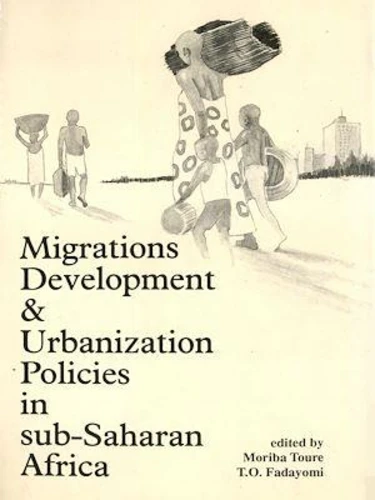
Throughout history, African people have traversed their continent. Why do people leave their place of birth and what do they seek? More importantly, what happens to the places they go to when they are joined by many others? With the colonialists' exploitation of raw materials and search for outlets for manufactured goods, new centres of production and communication were created destroying traditional economies in their wake.
The subsequent rural exodus has had a vast impact on the economic potential of Africa. Aging populations and decreased productivity in the rural areas, lead to pressure on over stretched housing, education and employment opportunities in the free sprouting urban outskirts. Even in relatively industrialized countries, droves of unemployed are continually on the move in the search, for work and a decent standard of living.
Recognizing the importance of population dynamics and their effects on development policies, CODESRIA has brought together a unique collection of studies from across the entire African continent. Twelve teams of African researchers and writers have been working since October 1986 to generate information and data on links between population dynamics, development policies, the urbanization process and the crisis of rural Africa.
The teams also suggest measures that could be taken to solve the various problems they identify. In this way, this book is not only a valuable reference source, but a vital contribution to the debate on Africa's future.
Throughout history, African people have traversed their continent. Why do people leave their place of birth and what do they seek? More importantly, what happens to the places they go to when they are joined by many others? With the colonialists' exploitation of raw materials and search for outlets for manufactured goods, new centres of production and communication were created destroying traditional economies in their wake.
The subsequent rural exodus has had a vast impact on the economic potential of Africa. Aging populations and decreased productivity in the rural areas, lead to pressure on over stretched housing, education and employment opportunities in the free sprouting urban outskirts. Even in relatively industrialized countries, droves of unemployed are continually on the move in the search, for work and a decent standard of living.
Recognizing the importance of population dynamics and their effects on development policies, CODESRIA has brought together a unique collection of studies from across the entire African continent. Twelve teams of African researchers and writers have been working since October 1986 to generate information and data on links between population dynamics, development policies, the urbanization process and the crisis of rural Africa.
The teams also suggest measures that could be taken to solve the various problems they identify. In this way, this book is not only a valuable reference source, but a vital contribution to the debate on Africa's future.

 , qui est-ce ?
