SOLDES
Jusqu'à -70% sur une sélection d'articles*

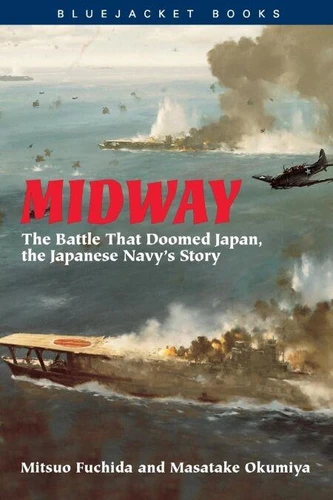
Midway: The Battle that Doomed Japan, the Japanese Navy's Story
Par :Formats :
Disponible dans votre compte client Decitre ou Furet du Nord dès validation de votre commande. Le format ePub est :
- Compatible avec une lecture sur My Vivlio (smartphone, tablette, ordinateur)
- Compatible avec une lecture sur liseuses Vivlio
- Pour les liseuses autres que Vivlio, vous devez utiliser le logiciel Adobe Digital Edition. Non compatible avec la lecture sur les liseuses Kindle, Remarkable et Sony
 , qui est-ce ?
Notre partenaire de plateforme de lecture numérique où vous retrouverez l'ensemble de vos ebooks gratuitement
Pour en savoir plus sur nos ebooks, consultez notre aide en ligne ici
C'est si simple ! Lisez votre ebook avec l'app Vivlio sur votre tablette, mobile ou ordinateur :

- FormatePub
- ISBN8230874812
- EAN9798230874812
- Date de parution31/08/2025
- Protection num.pas de protection
- Infos supplémentairesepub
- ÉditeurIndependently Published
Résumé
This landmark study was first published in English by the Naval Institute in 1955 and was added to the Classics of Naval Literature series in 1992. Widely acknowledged for its valuable Japanese insights into the battle that turned that tide of war in the Pacific, the book has made a great impact on American readers over the years. Two Japanese naval aviators who participated in the operation provide an unsparing analysis of what caused Japan's staggering defeat.
Mitsuo Fuchida, who led the first air strike on Pearl Harbor, commanded the Akagi carrier air group and later made a study of the battle at the Japanese Naval War College. Masatake Okumiya, one of Japan's first dive-bomber pilots, was aboard the light carrier Ryujo and later served as a staff officer in a carrier division. Armed with knowledge of top-secret documents destroyed by the Japanese and access to private papers, they show the operation to be ill-conceived and poorly planned and executed, and fault their flag officers for lacking initiative, leadership, and clear thinking.
With an introduction by an author known for his study of the battle from the American perspective, the work continues to make a significant contribution to World War II literature.
Mitsuo Fuchida, who led the first air strike on Pearl Harbor, commanded the Akagi carrier air group and later made a study of the battle at the Japanese Naval War College. Masatake Okumiya, one of Japan's first dive-bomber pilots, was aboard the light carrier Ryujo and later served as a staff officer in a carrier division. Armed with knowledge of top-secret documents destroyed by the Japanese and access to private papers, they show the operation to be ill-conceived and poorly planned and executed, and fault their flag officers for lacking initiative, leadership, and clear thinking.
With an introduction by an author known for his study of the battle from the American perspective, the work continues to make a significant contribution to World War II literature.