
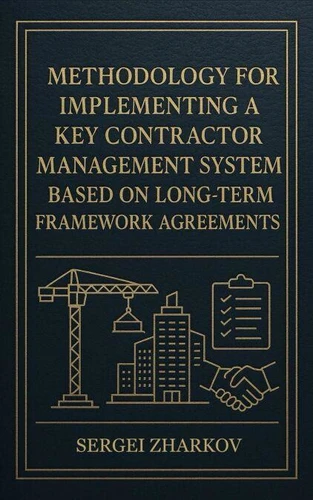
Methodology for Implementing a Key Contractor Management System Based on Long-Term Framework Agreements
Par :Formats :
Disponible dans votre compte client Decitre ou Furet du Nord dès validation de votre commande. Le format ePub est :
- Compatible avec une lecture sur My Vivlio (smartphone, tablette, ordinateur)
- Compatible avec une lecture sur liseuses Vivlio
- Pour les liseuses autres que Vivlio, vous devez utiliser le logiciel Adobe Digital Edition. Non compatible avec la lecture sur les liseuses Kindle, Remarkable et Sony
 , qui est-ce ?
Notre partenaire de plateforme de lecture numérique où vous retrouverez l'ensemble de vos ebooks gratuitement
Pour en savoir plus sur nos ebooks, consultez notre aide en ligne ici
C'est si simple ! Lisez votre ebook avec l'app Vivlio sur votre tablette, mobile ou ordinateur :

- FormatePub
- ISBN8218777395
- EAN9798218777395
- Date de parution02/10/2025
- Protection num.pas de protection
- Infos supplémentairesepub
- ÉditeurIndependently Published
Résumé
The methodological guidelines "Methodology for Implementing a Key Contractor Management System Based on Long-Term Framework Agreements" present a comprehensive framework for introducing and managing cooperation with Key General Contractors (KGC) through long-term framework contracts (3-5 years). The document advocates a shift from traditional tender-based procurement to a strategic partnership model, in which contractors become active participants in achieving the client company's objectives.
It outlines the system's value for customers, such as stability in investment programs, transparent pricing, reduced timelines, minimized transactional costs, and lower risks, and for contractors, including predictable workload, financial sustainability, and opportunities for technological and human resource development. The methodology provides a step-by-step implementation algorithm: establishing a cross-functional Management Committee; developing objective qualification criteria; conducting a comprehensive assessment and granting KGC status; formalizing relationships through framework agreements; operationally distributing work scopes via a competency matrix; signing project-specific contracts; and ensuring continuous performance evaluation through KPIs, incentive mechanisms, and contractor development programs.
Particular emphasis is placed on monitoring and reporting systems (operational, key indicators, and financial oversight), clearly defined roles and responsibilities, dispute resolution mechanisms through a three-level escalation model (operational-tactical-strategic), and feedback loops to enable continuous improvement. The final sections highlight strategic outcomes, such as improved manageability of investment activities, enhanced investment attractiveness, and increased predictability of project delivery.
Key success factors include senior management support, readiness to transform corporate culture, and qualified implementation teams. Potential risks, such as resistance to change, formalistic adoption, or imbalance in contractual terms, are identified along with measures for mitigation. This methodology is designed for executives and specialists of industrial, construction, and development companies seeking to optimize project management processes, reduce risks, and build sustainable long-term partnerships with contractors, ultimately ensuring higher efficiency and competitiveness.
It outlines the system's value for customers, such as stability in investment programs, transparent pricing, reduced timelines, minimized transactional costs, and lower risks, and for contractors, including predictable workload, financial sustainability, and opportunities for technological and human resource development. The methodology provides a step-by-step implementation algorithm: establishing a cross-functional Management Committee; developing objective qualification criteria; conducting a comprehensive assessment and granting KGC status; formalizing relationships through framework agreements; operationally distributing work scopes via a competency matrix; signing project-specific contracts; and ensuring continuous performance evaluation through KPIs, incentive mechanisms, and contractor development programs.
Particular emphasis is placed on monitoring and reporting systems (operational, key indicators, and financial oversight), clearly defined roles and responsibilities, dispute resolution mechanisms through a three-level escalation model (operational-tactical-strategic), and feedback loops to enable continuous improvement. The final sections highlight strategic outcomes, such as improved manageability of investment activities, enhanced investment attractiveness, and increased predictability of project delivery.
Key success factors include senior management support, readiness to transform corporate culture, and qualified implementation teams. Potential risks, such as resistance to change, formalistic adoption, or imbalance in contractual terms, are identified along with measures for mitigation. This methodology is designed for executives and specialists of industrial, construction, and development companies seeking to optimize project management processes, reduce risks, and build sustainable long-term partnerships with contractors, ultimately ensuring higher efficiency and competitiveness.