SOLDES
Jusqu'à -70% sur une sélection d'articles*

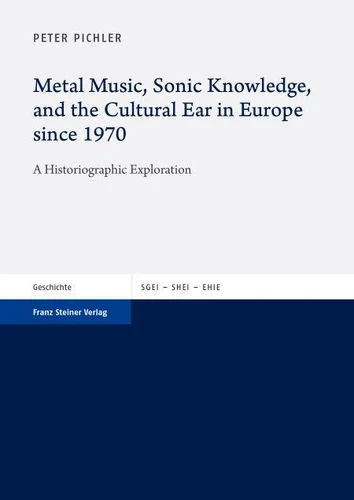
Metal Music, Sonic Knowledge, and the Cultural Ear in Europe since 1970. A Historiographic Exploration
Par :Formats :
Disponible dans votre compte client Decitre ou Furet du Nord dès validation de votre commande. Le format PDF est :
- Compatible avec une lecture sur My Vivlio (smartphone, tablette, ordinateur)
- Compatible avec une lecture sur liseuses Vivlio
- Pour les liseuses autres que Vivlio, vous devez utiliser le logiciel Adobe Digital Edition. Non compatible avec la lecture sur les liseuses Kindle, Remarkable et Sony
 , qui est-ce ?
Notre partenaire de plateforme de lecture numérique où vous retrouverez l'ensemble de vos ebooks gratuitement
Pour en savoir plus sur nos ebooks, consultez notre aide en ligne ici
C'est si simple ! Lisez votre ebook avec l'app Vivlio sur votre tablette, mobile ou ordinateur :

- Nombre de pages184
- FormatPDF
- ISBN978-3-515-12788-2
- EAN9783515127882
- Date de parution03/12/2020
- Protection num.Digital Watermarking
- Taille2 Mo
- Infos supplémentairespdf
- ÉditeurFranz Steiner
Résumé
Research on the process of European integration is usually restricted to the political, economic and legal aspects of Europeanisation. Still, we do not know enough about "practiced Europeanisation" in terms of everyday life and popular culture. Here, Peter Pichler explores a new area of research. He links the latest insights into the cultural history of the European Union with interdisciplinary research on heavy metal as a subculture throughout Europe.
He presents the first historiographic exploration of European integration in this subculture since 1970. In general, subcultural Europeanisation predates even political Europeanisation, as evidenced by networks of the metal scene breaking through the Iron Curtain in the beginning of the 1980s. The European metal scene constituted a borderless space. Today, the shared knowledge of rituals, codes, clothes, history and values of metal are present across the continent.
Pichler interprets this from a cultural-historical perspective against the background of Europeanisation after 1945.
He presents the first historiographic exploration of European integration in this subculture since 1970. In general, subcultural Europeanisation predates even political Europeanisation, as evidenced by networks of the metal scene breaking through the Iron Curtain in the beginning of the 1980s. The European metal scene constituted a borderless space. Today, the shared knowledge of rituals, codes, clothes, history and values of metal are present across the continent.
Pichler interprets this from a cultural-historical perspective against the background of Europeanisation after 1945.
A propos de Peter Pichler
23,99 €

12,99 €

19,99 €