SOLDES
Jusqu'à -70% sur une sélection d'articles*

Nouveauté
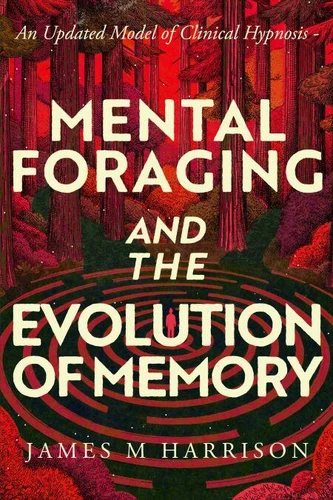
Mental Foraging and the Evolution of Memory: an updated model of clinical hypnosis
Par :Formats :
Disponible dans votre compte client Decitre ou Furet du Nord dès validation de votre commande. Le format ePub est :
- Compatible avec une lecture sur My Vivlio (smartphone, tablette, ordinateur)
- Compatible avec une lecture sur liseuses Vivlio
- Pour les liseuses autres que Vivlio, vous devez utiliser le logiciel Adobe Digital Edition. Non compatible avec la lecture sur les liseuses Kindle, Remarkable et Sony
 , qui est-ce ?
Notre partenaire de plateforme de lecture numérique où vous retrouverez l'ensemble de vos ebooks gratuitement
Pour en savoir plus sur nos ebooks, consultez notre aide en ligne ici
C'est si simple ! Lisez votre ebook avec l'app Vivlio sur votre tablette, mobile ou ordinateur :

- FormatePub
- ISBN8995391210
- EAN9798995391210
- Date de parution29/05/2026
- Protection num.pas de protection
- Infos supplémentairesepub
- ÉditeurMalbon Press
Résumé
The mind did not evolve to think. It evolved to forage. Knowing this, what if hypnosis isn't something strange or rare-but something your brain already knows how to do? In Mental Foraging and the Evolution of Memory, clinical hypnotist James M. Harrison argues that long before hypnosis was an idea about the workings of the unconscious mind, nervous systems had already evolved the ability to mentally forage.
Pausing to simulate, rehearse, and test possibilities before acting, this capacity became foundational to human imagination, memory, and adaptive behavior. Drawing from modern neuroscience, psychology, and the history of medicine, the book shows how clinical hypnosis works directly with this evolved ability, offering a biologically grounded method for guiding attention, perception, and behavior change.
Harrison presents a new framework for understanding the brain's native capacity for learning-one that restores confidence in what we were always capable of. We default to habit to conserve energy-but beneath those habits, the foraging mind is still there, still ready, waiting for an invitation to explore. A skilled clinician knows how to extend that invitation. The early models of the unconscious came from the best available thinking of an era when neuroscience was in its infancy.
Mental Foraging brings Occam's razor to the unconscious for an update that's been long overdue.
Pausing to simulate, rehearse, and test possibilities before acting, this capacity became foundational to human imagination, memory, and adaptive behavior. Drawing from modern neuroscience, psychology, and the history of medicine, the book shows how clinical hypnosis works directly with this evolved ability, offering a biologically grounded method for guiding attention, perception, and behavior change.
Harrison presents a new framework for understanding the brain's native capacity for learning-one that restores confidence in what we were always capable of. We default to habit to conserve energy-but beneath those habits, the foraging mind is still there, still ready, waiting for an invitation to explore. A skilled clinician knows how to extend that invitation. The early models of the unconscious came from the best available thinking of an era when neuroscience was in its infancy.
Mental Foraging brings Occam's razor to the unconscious for an update that's been long overdue.