Royden Loewen is a professor of history and Chair of Mennonite Studies at the University of Winnipeg. His books include Family, Church and Market: A Mennonite Community in the Old and New Worlds, and From the Inside Out: The Rural World of Mennonite Diarists.
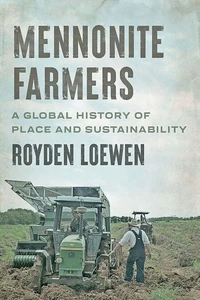
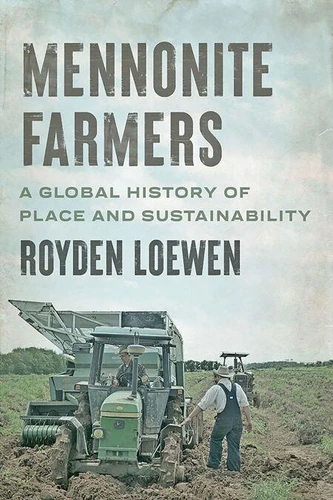
Mennonite Farmers. A Global History of Place and Sustainability
Par :Formats :
Disponible dans votre compte client Decitre ou Furet du Nord dès validation de votre commande. Le format ePub est :
- Compatible avec une lecture sur My Vivlio (smartphone, tablette, ordinateur)
- Compatible avec une lecture sur liseuses Vivlio
- Pour les liseuses autres que Vivlio, vous devez utiliser le logiciel Adobe Digital Edition. Non compatible avec la lecture sur les liseuses Kindle, Remarkable et Sony
 , qui est-ce ?
Notre partenaire de plateforme de lecture numérique où vous retrouverez l'ensemble de vos ebooks gratuitement
Pour en savoir plus sur nos ebooks, consultez notre aide en ligne ici
C'est si simple ! Lisez votre ebook avec l'app Vivlio sur votre tablette, mobile ou ordinateur :

- Nombre de pages352
- FormatePub
- ISBN978-0-88755-261-8
- EAN9780887552618
- Date de parution02/11/2021
- Protection num.Digital Watermarking
- Taille7 Mo
- Infos supplémentairesepub
- ÉditeurUniversity of Manitoba Press
Résumé
WINNER Wallace K. Ferguson Prize, Canadian Historical Association (2022)
WINNER Manitoba Day Award, Association of Manitoba Archives (2022)
Mennonite farmers can be found in dozens of countries spanning five continents. In this comparative world-scale environmental history, Royden Loewen draws on a multi-year study of seven geographically distinctive Anabaptist communities around the world, focusing on Mennonite farmers in Bolivia, Canada, Indonesia, the Netherlands, Russia, the United States, and Zimbabwe.
These farmers, who include Amish, Brethren in Christ, and Siberian Baptists, till the land in starkly distinctive climates. They absorb very disparate societal lessons while being shaped by particular faith outlooks, historical memory, and the natural environment. The book reveals the ways in which modern-day Mennonite farmers have adjusted to diverse temperatures, precipitation, soil types, and relative degrees of climate change.
These farmers have faced broad global forces of modernization during the twentieth and early twenty-first centuries, from commodity markets and intrusive governments to technologies marked increasingly by the mechanical, chemical, and genetic. As Mennonites, Loewen writes, these farmers were raised with knowledge of the historic Anabaptist teachings on community, simplicity, and peace that stood alongside ideas on place and sustainability.
Nonetheless, conditioned by gender, class, ethnicity, race, and local values, they put their agricultural ideas into practice in remarkably diverse ways. Mennonite Farmers is a pioneering work that brings faith into conversation with the land in distinctive ways.
These farmers, who include Amish, Brethren in Christ, and Siberian Baptists, till the land in starkly distinctive climates. They absorb very disparate societal lessons while being shaped by particular faith outlooks, historical memory, and the natural environment. The book reveals the ways in which modern-day Mennonite farmers have adjusted to diverse temperatures, precipitation, soil types, and relative degrees of climate change.
These farmers have faced broad global forces of modernization during the twentieth and early twenty-first centuries, from commodity markets and intrusive governments to technologies marked increasingly by the mechanical, chemical, and genetic. As Mennonites, Loewen writes, these farmers were raised with knowledge of the historic Anabaptist teachings on community, simplicity, and peace that stood alongside ideas on place and sustainability.
Nonetheless, conditioned by gender, class, ethnicity, race, and local values, they put their agricultural ideas into practice in remarkably diverse ways. Mennonite Farmers is a pioneering work that brings faith into conversation with the land in distinctive ways.