Felix Clarke is an English-language author specializing in history, technology, and cultural change. His books explore how innovation, political decisions, and shifting social values shape societies across different eras. His writing style combines detailed research with clear, engaging storytelling, making complex historical and contemporary topics accessible to a broad audience.
Nouveauté
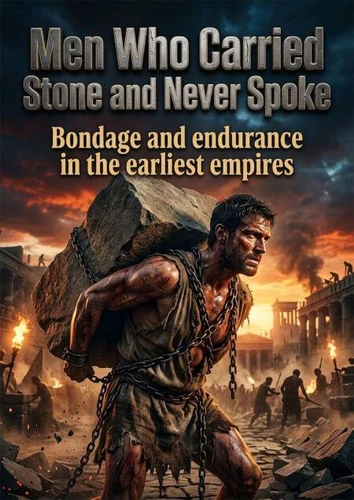
Men Who Carried Stone and Never Spoke. Bondage and endurance in the earliest empires
Par :Formats :
Disponible dans votre compte client Decitre ou Furet du Nord dès validation de votre commande. Le format ePub est :
- Compatible avec une lecture sur My Vivlio (smartphone, tablette, ordinateur)
- Compatible avec une lecture sur liseuses Vivlio
- Pour les liseuses autres que Vivlio, vous devez utiliser le logiciel Adobe Digital Edition. Non compatible avec la lecture sur les liseuses Kindle, Remarkable et Sony
 , qui est-ce ?
Notre partenaire de plateforme de lecture numérique où vous retrouverez l'ensemble de vos ebooks gratuitement
Pour en savoir plus sur nos ebooks, consultez notre aide en ligne ici
C'est si simple ! Lisez votre ebook avec l'app Vivlio sur votre tablette, mobile ou ordinateur :

- Nombre de pages194
- FormatePub
- ISBN978-3-565-59175-6
- EAN9783565591756
- Date de parution27/07/2026
- Protection num.pas de protection
- Taille1 Mo
- Infos supplémentairesepub
- ÉditeurEmphaloz Publishing House
Résumé
The great ziggurats and irrigation canals of ancient Mesopotamia are celebrated as marvels of engineering, yet the hands that built them remain invisible. This account shifts focus from kings and conquerors to the enslaved workers, conscripted laborers, and indebted farmers who shaped the clay, hauled the stone, and dug the canals under the scorching sun. Drawing on administrative records, ration lists, and skeletal evidence from excavations, it reconstructs lives forced into service across Sumerian, Akkadian, Neo-Assyrian, and Neo-Babylonian empires.
The narrative traces forced labor from early temple economies of Uruk to brutal corvée systems, examining how debt bondage, war captives, and state-sponsored migration created a permanent underclass. Monumental architecture was built on their backs. Yet this is also a story of resistance: work slowdowns, escape attempts, and quiet subversion by those who endured. By contextualizing Mesopotamian labor practices within broader patterns of ancient slavery across the Near East, it challenges romanticized views of early civilization.
For readers of social history and labor studies, this is an unflinching account of what progress demanded from those with no voice in its making.
The narrative traces forced labor from early temple economies of Uruk to brutal corvée systems, examining how debt bondage, war captives, and state-sponsored migration created a permanent underclass. Monumental architecture was built on their backs. Yet this is also a story of resistance: work slowdowns, escape attempts, and quiet subversion by those who endured. By contextualizing Mesopotamian labor practices within broader patterns of ancient slavery across the Near East, it challenges romanticized views of early civilization.
For readers of social history and labor studies, this is an unflinching account of what progress demanded from those with no voice in its making.