
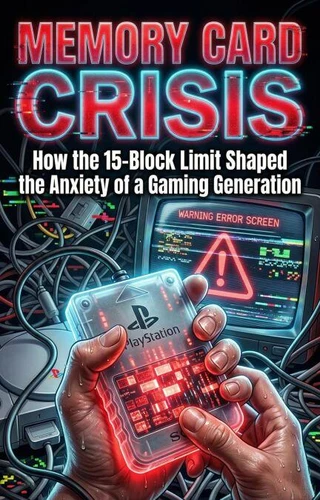
Memory Card Crisis. How the 15-Block Limit Shaped the Anxiety of a Gaming Generation
Par :Formats :
Disponible dans votre compte client Decitre ou Furet du Nord dès validation de votre commande. Le format ePub est :
- Compatible avec une lecture sur My Vivlio (smartphone, tablette, ordinateur)
- Compatible avec une lecture sur liseuses Vivlio
- Pour les liseuses autres que Vivlio, vous devez utiliser le logiciel Adobe Digital Edition. Non compatible avec la lecture sur les liseuses Kindle, Remarkable et Sony
 , qui est-ce ?
Notre partenaire de plateforme de lecture numérique où vous retrouverez l'ensemble de vos ebooks gratuitement
Pour en savoir plus sur nos ebooks, consultez notre aide en ligne ici
C'est si simple ! Lisez votre ebook avec l'app Vivlio sur votre tablette, mobile ou ordinateur :

- Nombre de pages201
- FormatePub
- ISBN978-3-565-31056-2
- EAN9783565310562
- Date de parution10/03/2026
- Protection num.pas de protection
- Taille936 Ko
- Infos supplémentairesepub
- ÉditeurEmphaloz Publishing House
Résumé
Before the cloud and built-in terabyte hard drives, a gamer's entire digital existence hung by a thread-specifically, a fragile piece of translucent grey plastic holding exactly 1 Megabyte of data. The Memory Card Crisis explores the technological bottleneck of the 32-bit era and the unparalleled psychological anxiety of the 15-block limit.
When gaming transitioned from 2D sprites to massive 3D worlds like Final Fantasy VII, cartridge save batteries were no longer sufficient.
Sony's solution was the external memory card. But memory was shockingly expensive. Developers had to ruthlessly compress save data, and players were forced to make agonizing choices about which cherished RPG saves to delete just to start a new game of Gran Turismo. This book delves into the hardware engineering and brutal economics of the late 90s console wars. It examines how the physical fragility of these cards-and the devastating pain of corrupted data-instilled a unique form of digital hoarding and paranoia in an entire generation. Revisit the era of manual saves and overwritten trauma.
Learn how the severe constraints of early storage technology paradoxically made our virtual accomplishments feel intensely valuable and painfully real.
Sony's solution was the external memory card. But memory was shockingly expensive. Developers had to ruthlessly compress save data, and players were forced to make agonizing choices about which cherished RPG saves to delete just to start a new game of Gran Turismo. This book delves into the hardware engineering and brutal economics of the late 90s console wars. It examines how the physical fragility of these cards-and the devastating pain of corrupted data-instilled a unique form of digital hoarding and paranoia in an entire generation. Revisit the era of manual saves and overwritten trauma.
Learn how the severe constraints of early storage technology paradoxically made our virtual accomplishments feel intensely valuable and painfully real.