SOLDES
Jusqu'à -70% sur une sélection d'articles*

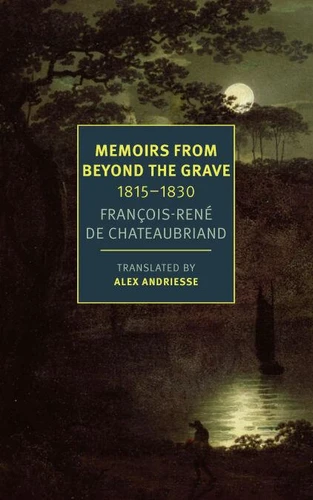
Memoirs from Beyond the Grave. 1815-1830
Par :Formats :
Disponible dans votre compte client Decitre ou Furet du Nord dès validation de votre commande. Le format ePub protégé est :
- Compatible avec une lecture sur My Vivlio (smartphone, tablette, ordinateur)
- Compatible avec une lecture sur liseuses Vivlio
- Pour les liseuses autres que Vivlio, vous devez utiliser le logiciel Adobe Digital Edition. Non compatible avec la lecture sur les liseuses Kindle, Remarkable et Sony
- Non compatible avec un achat hors France métropolitaine
 , qui est-ce ?
Notre partenaire de plateforme de lecture numérique où vous retrouverez l'ensemble de vos ebooks gratuitement
Pour en savoir plus sur nos ebooks, consultez notre aide en ligne ici
C'est si simple ! Lisez votre ebook avec l'app Vivlio sur votre tablette, mobile ou ordinateur :

- Nombre de pages592
- FormatePub
- ISBN978-1-68137-962-3
- EAN9781681379623
- Date de parution02/12/2025
- Protection num.Adobe DRM
- Taille1 Mo
- Infos supplémentairesepub
- ÉditeurNYRB Classics
Résumé
The third part of the epic autobiography of Chateaubriand, the aristocratic Frenchman who lived through the beginning of the French Revolution and who would become the founder of the Romantic movement in Europe, now in a new, unabridged English translation-the first in a century. In 1815-with the Napoleonic era at an end and royalty restored-François-René de Chateaubriand seemed poised, along with the Bourbon family he'd long supported, to wield unprecedented power.
Already one of France's most celebrated writers, he now became an ambassador and statesman of the French kingdom. Yet as passionate about royalty as Chateaubriand was in principle, in reality he was a recalcitrant subject. A defender of the constitution and of freedom of the press, he quarreled constantly with Louis XVIII and Charles X and eventually tendered his resignation-just in time for the July Revolution, which put an end to Bourbon rule and allowed Chateaubriand to go back to praising the family, now safely exiled to the realm of the ideal.
In the third volume of Alex Andriesse's new translation of Memoirs from Beyond the Grave, Chateaubriand writes about international politics, a papal conclave, and the revolutionary strife of 1830 with undiminished flair. And he remains one of the great masters-perhaps unequaled in this-of literary digression. Readers will gladly accompany him on walks around Paris and Rome, as he reflects on storms and ruins, moonlight and mortality.
Already one of France's most celebrated writers, he now became an ambassador and statesman of the French kingdom. Yet as passionate about royalty as Chateaubriand was in principle, in reality he was a recalcitrant subject. A defender of the constitution and of freedom of the press, he quarreled constantly with Louis XVIII and Charles X and eventually tendered his resignation-just in time for the July Revolution, which put an end to Bourbon rule and allowed Chateaubriand to go back to praising the family, now safely exiled to the realm of the ideal.
In the third volume of Alex Andriesse's new translation of Memoirs from Beyond the Grave, Chateaubriand writes about international politics, a papal conclave, and the revolutionary strife of 1830 with undiminished flair. And he remains one of the great masters-perhaps unequaled in this-of literary digression. Readers will gladly accompany him on walks around Paris and Rome, as he reflects on storms and ruins, moonlight and mortality.
A propos de François-René de Chateaubriand


3.5/5
4/5
Atala. Suivi de René
E-book
5,49 €

5/5
4.5/5
9,90 €
3.8/5
7,90 €

9,90 €
René
E-book
9,99 €

3.8/5
7,00 €



65,00 €