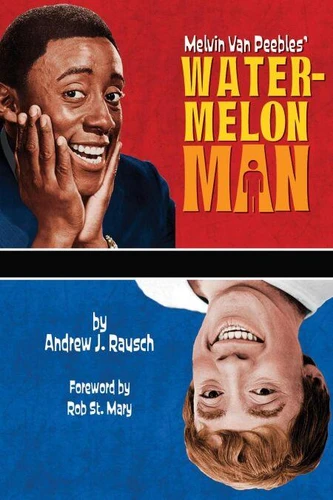
Melvin Van Peebles (1932-2001) is one of the most important figures in the history of black cinema. He is best known for his 1971 low-budget film Sweet Sweetback's Baadasssss Song, which is often credited with kicking off the blaxploitation film cycle. His previous effort, 1970's Watermelon Man, Van Peebles' first and only studio film (making him only the third black filmmaker to helm a studio picture), is sometimes dismissed as a footnote.
But Watermelon Man is significant because it established Van Peebles as an American filmmaking original and it earned him the carte blanche to craft Sweetback. Perhaps the most eye-opening aspect of Watermelon Man was Van Peebles' decision to flip the blackface tradition on its head, crafting a film with a black actor acting goofy while wearing whiteface make-up. Also interesting is the director's claim that Columbia Pictures had no idea that he was making a movie that was intended to make fun of white people just as blacks had been mocked by whites for more than a century before.
Despite Watermelon Man's original script having been written by white scribe Herman Raucher, there can be little doubt that the resulting picture is the vision of Van Peebles alone. Melvin Van Peebles was a Renaissance Man. In addition to making movies, he was also an astronomer, novelist, playwright, photographer, musician, and stock exchange trader. Van Peebles' films, as well as his rebellious public image, played a huge role in inspiring the legions of black filmmakers who have since followed.
This book isn't only a celebration of an important and often-overlooked film, but also a look at the complex and remarkable filmmaker behind it.
Melvin Van Peebles (1932-2001) is one of the most important figures in the history of black cinema. He is best known for his 1971 low-budget film Sweet Sweetback's Baadasssss Song, which is often credited with kicking off the blaxploitation film cycle. His previous effort, 1970's Watermelon Man, Van Peebles' first and only studio film (making him only the third black filmmaker to helm a studio picture), is sometimes dismissed as a footnote.
But Watermelon Man is significant because it established Van Peebles as an American filmmaking original and it earned him the carte blanche to craft Sweetback. Perhaps the most eye-opening aspect of Watermelon Man was Van Peebles' decision to flip the blackface tradition on its head, crafting a film with a black actor acting goofy while wearing whiteface make-up. Also interesting is the director's claim that Columbia Pictures had no idea that he was making a movie that was intended to make fun of white people just as blacks had been mocked by whites for more than a century before.
Despite Watermelon Man's original script having been written by white scribe Herman Raucher, there can be little doubt that the resulting picture is the vision of Van Peebles alone. Melvin Van Peebles was a Renaissance Man. In addition to making movies, he was also an astronomer, novelist, playwright, photographer, musician, and stock exchange trader. Van Peebles' films, as well as his rebellious public image, played a huge role in inspiring the legions of black filmmakers who have since followed.
This book isn't only a celebration of an important and often-overlooked film, but also a look at the complex and remarkable filmmaker behind it.

 , qui est-ce ?
