
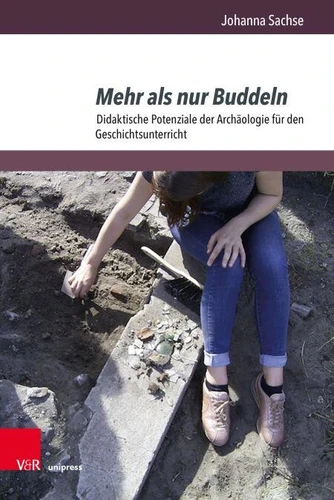
Mehr als nur Buddeln. Didaktische Potenziale der Archäologie für den Geschichtsunterricht
Par :Formats :
Disponible dans votre compte client Decitre ou Furet du Nord dès validation de votre commande. Le format PDF est :
- Compatible avec une lecture sur My Vivlio (smartphone, tablette, ordinateur)
- Compatible avec une lecture sur liseuses Vivlio
- Pour les liseuses autres que Vivlio, vous devez utiliser le logiciel Adobe Digital Edition. Non compatible avec la lecture sur les liseuses Kindle, Remarkable et Sony
 , qui est-ce ?
Notre partenaire de plateforme de lecture numérique où vous retrouverez l'ensemble de vos ebooks gratuitement
Pour en savoir plus sur nos ebooks, consultez notre aide en ligne ici
C'est si simple ! Lisez votre ebook avec l'app Vivlio sur votre tablette, mobile ou ordinateur :

- Nombre de pages342
- FormatPDF
- ISBN978-3-8470-1796-7
- EAN9783847017967
- Date de parution20/01/2025
- Protection num.pas de protection
- Taille4 Mo
- Infos supplémentairespdf
- ÉditeurV&R Unipress
Résumé
Archäologie ist im Alltag omnipräsent und fasziniert die Menschen. Wie kann diese günstige Ausgangslage für den Geschichtsunterricht fruchtbar gemacht werden und was nehmen Schüler:innen mit, wenn sie selbst eine archäologische Ausgrabung durchführen? Eine erstmals in Deutschland durchgeführte explorative Studie gibt Aufschluss darüber, welche Vorstellungen Schüler:innen von Archäologie haben und inwiefern sich diese mit der Teilnahme an einer archäologischen Ausgrabung verändern.
Dafür haben jeweils zwei Schüler:innengruppen aus dem 9. Jahrgang sowie der Oberstufe an verschiedenen Ausgrabungen teilgenommen. Sie wurden vorher und hinterher zu ihren Einschätzungen befragt. Johanna Sachse gibt im Theorieteil einen umfassenden Überblick über die aktuelle Situation der Archäologie in deutschen Schulen und zeigt im Empirieteil, welche Lernpotenziale diese für Schü ler:innen bietet. Archaeology is omnipresent in everyday life and fascinates people.
How can this favorable starting point be used for history lessons and what do pupils take away with them when they carry out an archaeological excavation themselves? A study conducted for the first time in Germany sheds light on what ideas pupils have about archaeology and to what extent these change when they take part in an archaeological excavation. To this end, two groups of pupils from the 9th grade and the upper school each took part in different excavations and were interviewed before and after about their findings.
Johanna Sachse provides a comprehensive overview of the current situation of archaeology in German schools and shows the learning potential it offers for students.
Dafür haben jeweils zwei Schüler:innengruppen aus dem 9. Jahrgang sowie der Oberstufe an verschiedenen Ausgrabungen teilgenommen. Sie wurden vorher und hinterher zu ihren Einschätzungen befragt. Johanna Sachse gibt im Theorieteil einen umfassenden Überblick über die aktuelle Situation der Archäologie in deutschen Schulen und zeigt im Empirieteil, welche Lernpotenziale diese für Schü ler:innen bietet. Archaeology is omnipresent in everyday life and fascinates people.
How can this favorable starting point be used for history lessons and what do pupils take away with them when they carry out an archaeological excavation themselves? A study conducted for the first time in Germany sheds light on what ideas pupils have about archaeology and to what extent these change when they take part in an archaeological excavation. To this end, two groups of pupils from the 9th grade and the upper school each took part in different excavations and were interviewed before and after about their findings.
Johanna Sachse provides a comprehensive overview of the current situation of archaeology in German schools and shows the learning potential it offers for students.