SOLDES
Jusqu'à -70% sur une sélection d'articles*

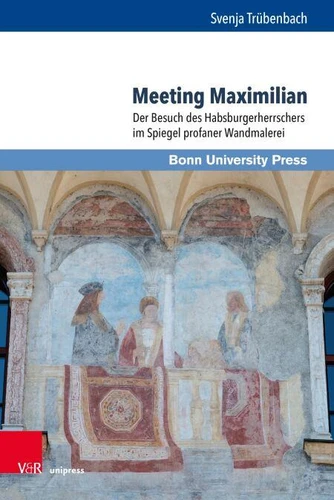
Meeting Maximilian. Der Besuch des Habsburgerherrschers im Spiegel profaner Wandmalerei
Par :Formats :
Disponible dans votre compte client Decitre ou Furet du Nord dès validation de votre commande. Le format PDF est :
- Compatible avec une lecture sur My Vivlio (smartphone, tablette, ordinateur)
- Compatible avec une lecture sur liseuses Vivlio
- Pour les liseuses autres que Vivlio, vous devez utiliser le logiciel Adobe Digital Edition. Non compatible avec la lecture sur les liseuses Kindle, Remarkable et Sony
 , qui est-ce ?
Notre partenaire de plateforme de lecture numérique où vous retrouverez l'ensemble de vos ebooks gratuitement
Pour en savoir plus sur nos ebooks, consultez notre aide en ligne ici
C'est si simple ! Lisez votre ebook avec l'app Vivlio sur votre tablette, mobile ou ordinateur :

- Nombre de pages493
- FormatPDF
- ISBN978-3-8470-1579-6
- EAN9783847015796
- Date de parution04/09/2023
- Protection num.pas de protection
- Taille33 Mo
- Infos supplémentairespdf
- ÉditeurV&R Unipress
Résumé
Der Herrscherbesuch war ein ehrenvolles Ereignis, das als Anlass und Thema schon in den frühesten profanen Wandmalereien des Mittelalters fassbar ist. Svenja Trübenbachs Studie untersucht dieses Phänomen erstmals für den berühmten Maximilian I. Im Zentrum stehen Bildprogramme der Anwesen, in denen der König bzw. Kaiser (mutmaßlich) empfangen wurde oder werden sollte. Mit welchen Bildern reagierten die Hausherren auf den Besuch, wie setzten sie sie ein, um sich und ihr Haus zu empfehlen? Welche Vorstellungen von königlich-kaiserlicher Macht und Herrschaft spiegeln sich darin wider und wo verorteten sich die Auftraggeber diesbezüglich selbst? Nicht zuletzt stellt sich die Frage, welche Rolle der Aufenthalt Maximilians I.
und die Wandgemälde für die eigene Macht oder gar Herrschaft der Gastgeber spielten. The ruler's visit was a highly honorable event that can be traced both as an occasion and subject already in the earliest secular wall paintings of the Middle Ages. Svenja Trübenbachs study examines this phenomenon for the first time concerning the famous Habsburg Maximilian I. The focus is on the pictorial programs of the castles and houses in which the Holy Roman King and later Emperor was or was to be (presumably) received.
With which images did the owners react to the visit, how did they use them to recommend themselves and their house? What ideas of royal and imperial power do the paintings reflect, and where did the clients place themselves in this regard? Last but not least, the question arises as to what role Maximilian's stay and the murals played for the hosts' own power.
und die Wandgemälde für die eigene Macht oder gar Herrschaft der Gastgeber spielten. The ruler's visit was a highly honorable event that can be traced both as an occasion and subject already in the earliest secular wall paintings of the Middle Ages. Svenja Trübenbachs study examines this phenomenon for the first time concerning the famous Habsburg Maximilian I. The focus is on the pictorial programs of the castles and houses in which the Holy Roman King and later Emperor was or was to be (presumably) received.
With which images did the owners react to the visit, how did they use them to recommend themselves and their house? What ideas of royal and imperial power do the paintings reflect, and where did the clients place themselves in this regard? Last but not least, the question arises as to what role Maximilian's stay and the murals played for the hosts' own power.