SOLDES
Jusqu'à -70% sur une sélection d'articles*

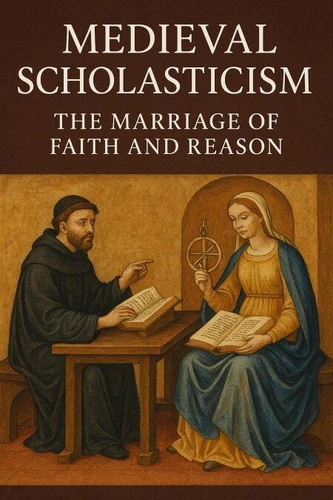
Medieval Scholasticism: The Marriage of Faith and Reason
Par :Formats :
Disponible dans votre compte client Decitre ou Furet du Nord dès validation de votre commande. Le format ePub est :
- Compatible avec une lecture sur My Vivlio (smartphone, tablette, ordinateur)
- Compatible avec une lecture sur liseuses Vivlio
- Pour les liseuses autres que Vivlio, vous devez utiliser le logiciel Adobe Digital Edition. Non compatible avec la lecture sur les liseuses Kindle, Remarkable et Sony
 , qui est-ce ?
Notre partenaire de plateforme de lecture numérique où vous retrouverez l'ensemble de vos ebooks gratuitement
Pour en savoir plus sur nos ebooks, consultez notre aide en ligne ici
C'est si simple ! Lisez votre ebook avec l'app Vivlio sur votre tablette, mobile ou ordinateur :

- FormatePub
- ISBN8230079859
- EAN9798230079859
- Date de parution01/04/2025
- Protection num.pas de protection
- Infos supplémentairesepub
- ÉditeurIndependently Published
Résumé
Scholasticism, as an intellectual tradition, arose in the heart of the medieval Christian world, embodying an attempt to synthesize faith and reason, divine revelation and human intellect. This tradition emerged in the context of a Europe that had been reshaped by the collapse of the Roman Empire, the rise of Christianity, and the complex intersections of the ancient classical world and nascent Christian theology.
The Middle Ages, stretching roughly from the 5th to the 15th century, were a period of philosophical flourishing that saw a series of attempts to reconcile the seemingly disparate realms of sacred and secular knowledge. The term Scholasticism itself is derived from the word scholasticus, meaning "pertaining to schools, " reflecting its origins in the medieval universities where debates were carried out within the structured confines of educational institutions.
The Middle Ages, stretching roughly from the 5th to the 15th century, were a period of philosophical flourishing that saw a series of attempts to reconcile the seemingly disparate realms of sacred and secular knowledge. The term Scholasticism itself is derived from the word scholasticus, meaning "pertaining to schools, " reflecting its origins in the medieval universities where debates were carried out within the structured confines of educational institutions.
A propos de Ryan Evans


2,99 €


2,99 €


2,99 €


3,99 €

2,99 €
2,99 €