SOLDES
Jusqu'à -70% sur une sélection d'articles*

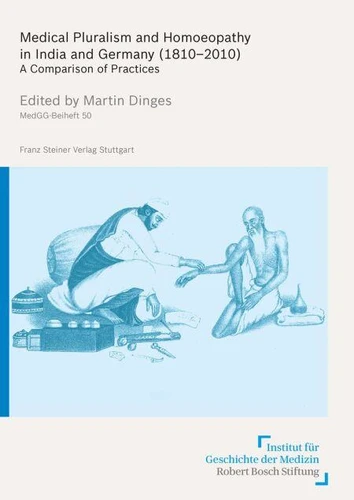
Medical Pluralism and Homoeopathy in India and Germany (1810–2010). A Comparison of Practices
Par :Formats :
Disponible dans votre compte client Decitre ou Furet du Nord dès validation de votre commande. Le format PDF est :
- Compatible avec une lecture sur My Vivlio (smartphone, tablette, ordinateur)
- Compatible avec une lecture sur liseuses Vivlio
- Pour les liseuses autres que Vivlio, vous devez utiliser le logiciel Adobe Digital Edition. Non compatible avec la lecture sur les liseuses Kindle, Remarkable et Sony
 , qui est-ce ?
Notre partenaire de plateforme de lecture numérique où vous retrouverez l'ensemble de vos ebooks gratuitement
Pour en savoir plus sur nos ebooks, consultez notre aide en ligne ici
C'est si simple ! Lisez votre ebook avec l'app Vivlio sur votre tablette, mobile ou ordinateur :

- Nombre de pages250
- FormatPDF
- ISBN978-3-515-10702-0
- EAN9783515107020
- Date de parution21/02/2014
- Protection num.Digital Watermarking
- Taille2 Mo
- Infos supplémentairespdf
- ÉditeurFranz Steiner
Résumé
Medical Pluralism is by now recognized as a reality in many countries. Studies, however, bringing together anthropologists and historians working on this subject are still rare. A comparative view on Germany and India with their different patterns of institutionalisation of medical pluralism is particularly rewarding. This volume focuses on practices starting with the story of a Transsylvanian lay healer who functioned in Lahore as a cultural broker.
Indigenising of homoeopathy in Bengal shows a particular mode of appropriation. Patients and their choices are considered for the late 19th and late 20th century Germany and in present day India. In addition to the practices of lay healers as health care providers in Bengal and in Indian slums, independent General Practitioners and physicians working in the public health care system are analysed too.
A case study of an Indian hospital shows a pragmatic way to introduce medical pluralism into a modern "allopathic" institution. The political debate on medical pluralism e.g. in the German Reichstag in the beginning of the 20th century is also one of the topics. The e-book concludes with a theoretical reflection on the concept of medical pluralism.
Indigenising of homoeopathy in Bengal shows a particular mode of appropriation. Patients and their choices are considered for the late 19th and late 20th century Germany and in present day India. In addition to the practices of lay healers as health care providers in Bengal and in Indian slums, independent General Practitioners and physicians working in the public health care system are analysed too.
A case study of an Indian hospital shows a pragmatic way to introduce medical pluralism into a modern "allopathic" institution. The political debate on medical pluralism e.g. in the German Reichstag in the beginning of the 20th century is also one of the topics. The e-book concludes with a theoretical reflection on the concept of medical pluralism.
A propos de Martin Dinges


52,00 €