SOLDES
Jusqu'à -70% sur une sélection d'articles*

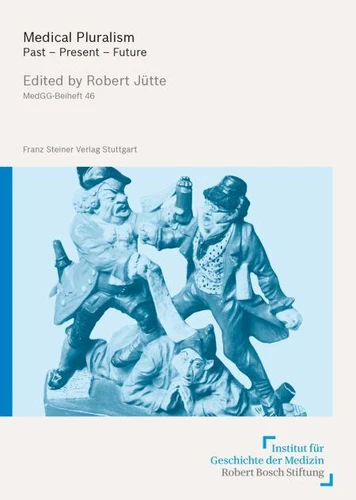
Medical Pluralism. Past – Present – Future
Par :Formats :
Disponible dans votre compte client Decitre ou Furet du Nord dès validation de votre commande. Le format PDF est :
- Compatible avec une lecture sur My Vivlio (smartphone, tablette, ordinateur)
- Compatible avec une lecture sur liseuses Vivlio
- Pour les liseuses autres que Vivlio, vous devez utiliser le logiciel Adobe Digital Edition. Non compatible avec la lecture sur les liseuses Kindle, Remarkable et Sony
 , qui est-ce ?
Notre partenaire de plateforme de lecture numérique où vous retrouverez l'ensemble de vos ebooks gratuitement
Pour en savoir plus sur nos ebooks, consultez notre aide en ligne ici
C'est si simple ! Lisez votre ebook avec l'app Vivlio sur votre tablette, mobile ou ordinateur :

- Nombre de pages205
- FormatPDF
- ISBN978-3-515-10472-2
- EAN9783515104722
- Date de parution07/11/2013
- Protection num.Digital Watermarking
- Taille2 Mo
- Infos supplémentairespdf
- ÉditeurFranz Steiner
Résumé
Any exploration of plural medicine including the historical perspective needs to be aware of the conflict between regular and irregular healers which existed already in the pre-modern era, although distinctive features such as scientific, alternative or traditional which are so familiar to us today did not yet play a role. In the early modern period we observe a complex array of heterogeneous medical ideas and practices which has not much in common with the kind of pluralism or plurality which we can find in modern health care systems in Europe and non-western countries (e.g.
India, Japan). Comparing the medical market place in pre-modern, 19th, and early 20th-century Western Europe with the present situation in health care, this book deals with the historical development as well as with the present state of medical pluralism in and outside Europe. The studies come up with data and evidence from a variety of sources, suggesting that unconventional medicine has been a persistent presence in health care over the past two to four hundred years.
The contributors were drawn from different academic disciplines such as medical history, medicine, sociology, and anthropology.
India, Japan). Comparing the medical market place in pre-modern, 19th, and early 20th-century Western Europe with the present situation in health care, this book deals with the historical development as well as with the present state of medical pluralism in and outside Europe. The studies come up with data and evidence from a variety of sources, suggesting that unconventional medicine has been a persistent presence in health care over the past two to four hundred years.
The contributors were drawn from different academic disciplines such as medical history, medicine, sociology, and anthropology.
A propos de Robert Jütte


54,00 €

54,00 €

52,00 €

52,00 €

25,99 €