SOLDES
Jusqu'à -70% sur une sélection d'articles*

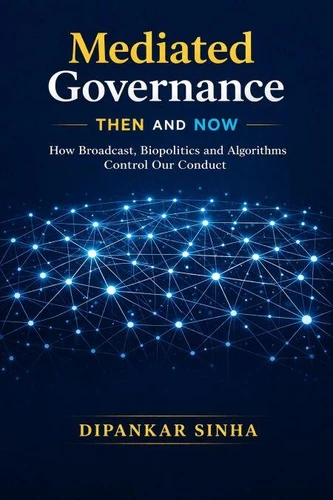
Mediated Governance Then and Now: How Broadcast, Biopolitics and Algorithms Control Our Conduct
Par :Formats :
Disponible dans votre compte client Decitre ou Furet du Nord dès validation de votre commande. Le format ePub est :
- Compatible avec une lecture sur My Vivlio (smartphone, tablette, ordinateur)
- Compatible avec une lecture sur liseuses Vivlio
- Pour les liseuses autres que Vivlio, vous devez utiliser le logiciel Adobe Digital Edition. Non compatible avec la lecture sur les liseuses Kindle, Remarkable et Sony
 , qui est-ce ?
Notre partenaire de plateforme de lecture numérique où vous retrouverez l'ensemble de vos ebooks gratuitement
Pour en savoir plus sur nos ebooks, consultez notre aide en ligne ici
C'est si simple ! Lisez votre ebook avec l'app Vivlio sur votre tablette, mobile ou ordinateur :

- FormatePub
- ISBN8233370977
- EAN9798233370977
- Date de parution21/03/2026
- Protection num.pas de protection
- Infos supplémentairesepub
- ÉditeurLinda Balsamo
Résumé
The book intensively explores the governance techniques of control of public behaviour in the context of mediation. It draws on Michel Foucault's historic formulations - "governmentality" and "conduct of conduct" - but expands them to the contemporary times to trace the evolution of surveillance from the pre-digital past to the digital present. The analysis covers three sequential phases: i) The Broadcast era and the people-as-mass audience; ii) The Biopolitical epoch and the people-as-aggregates; iii) The Algorithmic time with people-as-data points.
In its endeavour to highlight an under-focused area the book unravels how the innovative and unique mediating strategies of each phase unleash modulation of the identity of the public in the name of governance. Written in a lucid and engaging way, the book will be useful for academics, researchers and advanced students in social sciences and humanities. It will also be of interest to general readers seeking an appropriate and updated understanding of the behind-the-scene maneuvering of governance for nearly nine decades.
In its endeavour to highlight an under-focused area the book unravels how the innovative and unique mediating strategies of each phase unleash modulation of the identity of the public in the name of governance. Written in a lucid and engaging way, the book will be useful for academics, researchers and advanced students in social sciences and humanities. It will also be of interest to general readers seeking an appropriate and updated understanding of the behind-the-scene maneuvering of governance for nearly nine decades.