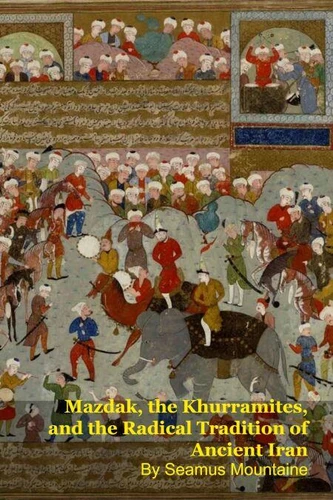
Mazdak, the Khurramites, and the Radical Tradition of Ancient IranIn the late fifth century CE, a Zoroastrian priest named Mazdak looked at the suffering world of the Sasanian Empire and reached a revolutionary conclusion: the poverty of the many and the wealth of the few were not the expression of divine order but the product of cosmic theft. What followed was one of the most dramatic social experiments in the history of the ancient world - a movement that briefly held state power, opened the granaries of the nobility, redistributed aristocratic land, and challenged the entire ideological apparatus of Iranian civilisation.
This book traces the full arc of the Mazdakite phenomenon: from its roots in the theological ferment of Late Antique Iran, through the extraordinary decade of officially sanctioned social revolution under Kavadh I, through the bloody suppression ordered by Khosrow I and the massacre of the Human Garden, and into the underground centuries of survival that carried the tradition through the Arab conquest and into the Islamic world, where it fed the Khurramite revolts, the theology of Babak Khorramdin's great rebellion, and the esoteric currents of medieval Islam.
Engaging with the movement's theology, its social programme, its political consequences, and its extraordinary afterlife, this book argues that Mazdak's questions - about justice, equality, and the proper ownership of the world - have never been fully answered.
Mazdak, the Khurramites, and the Radical Tradition of Ancient IranIn the late fifth century CE, a Zoroastrian priest named Mazdak looked at the suffering world of the Sasanian Empire and reached a revolutionary conclusion: the poverty of the many and the wealth of the few were not the expression of divine order but the product of cosmic theft. What followed was one of the most dramatic social experiments in the history of the ancient world - a movement that briefly held state power, opened the granaries of the nobility, redistributed aristocratic land, and challenged the entire ideological apparatus of Iranian civilisation.
This book traces the full arc of the Mazdakite phenomenon: from its roots in the theological ferment of Late Antique Iran, through the extraordinary decade of officially sanctioned social revolution under Kavadh I, through the bloody suppression ordered by Khosrow I and the massacre of the Human Garden, and into the underground centuries of survival that carried the tradition through the Arab conquest and into the Islamic world, where it fed the Khurramite revolts, the theology of Babak Khorramdin's great rebellion, and the esoteric currents of medieval Islam.
Engaging with the movement's theology, its social programme, its political consequences, and its extraordinary afterlife, this book argues that Mazdak's questions - about justice, equality, and the proper ownership of the world - have never been fully answered.

 , qui est-ce ?
