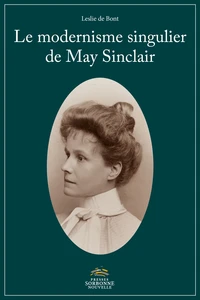
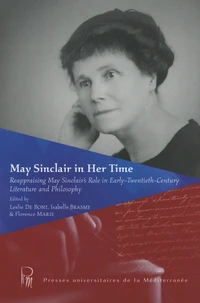
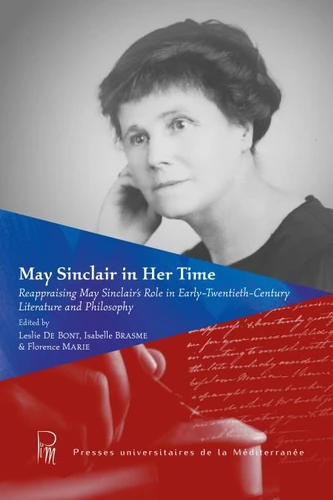
May sinclair has been typically considered as a liminal author, positioned between two eras: the 19th and the 20th centuries, Victorian culture and modernism, traditional and avant-garde writing and thinking. As a result, traditional criticism has confined her to the margins of 20th-century literature and philosophy. Re-examining Sinclair's involvement in the literary and philosophical debates of her time, this collaborative volume seeks to challenge this liminal status and to reassert Sinclair's role as an author, critic and thinker firmly established within her time.
Leading experts in philosophy and in criticism on May Sinclair thus investigate her presence on the literary scene, her dialogues with her contemporaries (e.g. Dorothy Richardson, H. D., Ford Madox Ford and James Joyce) and her engagement with topical issues such as heredity, women's rights and mysticism, as well as with modernist paradigms such as the epiphany. In light of these new analyses, rather than being uncomfortably situated between two eras, Sinclair emerges as fully in and of her time, engaged in a constant conversation with fellow thinkers, writers, and artists.
On a larger scale, this reappraisal of Sinclair's fruitful connections with her peers invites us to go beyond the conventional divide opposing Victorian and modernist writing, and to participate in the current dynamics in criticism that aims to offer a more inclusive and accurate definition of the intellectual scene in early-20th-century Britain.
May sinclair has been typically considered as a liminal author, positioned between two eras: the 19th and the 20th centuries, Victorian culture and modernism, traditional and avant-garde writing and thinking. As a result, traditional criticism has confined her to the margins of 20th-century literature and philosophy. Re-examining Sinclair's involvement in the literary and philosophical debates of her time, this collaborative volume seeks to challenge this liminal status and to reassert Sinclair's role as an author, critic and thinker firmly established within her time.
Leading experts in philosophy and in criticism on May Sinclair thus investigate her presence on the literary scene, her dialogues with her contemporaries (e.g. Dorothy Richardson, H. D., Ford Madox Ford and James Joyce) and her engagement with topical issues such as heredity, women's rights and mysticism, as well as with modernist paradigms such as the epiphany. In light of these new analyses, rather than being uncomfortably situated between two eras, Sinclair emerges as fully in and of her time, engaged in a constant conversation with fellow thinkers, writers, and artists.
On a larger scale, this reappraisal of Sinclair's fruitful connections with her peers invites us to go beyond the conventional divide opposing Victorian and modernist writing, and to participate in the current dynamics in criticism that aims to offer a more inclusive and accurate definition of the intellectual scene in early-20th-century Britain.

 , qui est-ce ?