During her 110-year lifetime, Maude Allen Williams went from oil lamps to a microwave oven, from the horse and buggy to an automobile. She stepped onto an airplane for the first time at age 77. Maude was married at 19, four months pregnant, to Lee Williams. She once said her Puritan forefathers might not have approved. The cold winds of winter and the hot winds of summer blew under the ill-fitting doors of the family's sprawling, story-and-a-half, 10-room farmhouse on the banks of Rush Creek.
It had been built in 1853 by Lee's grandfather on a Congressional land grant. The couple had no electricity, no indoor plumbing. While her husband plowed and planted the fields, Maude baked bread in the oven of her temperamental 400-pound wood-burning Kalamazoo stove, churned butter, canned fruits from the orchard and vegetables from the garden, did the laundry on a washboard until after her four youngsters were potty trained, made their clothes by hand from flour sacks, and read to them by lamplight.
Labor was dawn-to-dusk, but there were compensations: the view of the creek from the shady front porch, spectacular sunrises and sunsets, terrifying storms, and the caroling of birds (except during the winter months when the landscape was a Christmasy extravaganza). Maude was doctor, teacher, critic and friend. She taught her children to be self-sufficient, told them of the satisfaction gained of a job well done, and warned that "nothing is free." She taught them to love the smell of the overturned earth, the song of the robin at daybreak, of the whippoorwill in the gathering dusk, and even the croaking of frogs which shattered the peace of August nights as hundreds staged their own overture from the farm creek across the way.
She never drove a car (although her husband bought a Chevrolet in 1920). She refused to get into a bathing suit, considered holding hands in public a sign of bad taste. As a free thinker, she welcomed the advent of women's suffrage. She voted for Warren G. Harding for President in 1920--the year that women got the vote--and cast her ballot in every Presidential election for the remainder of her life.
The book is history and biography, and includes the effects of two world wars and a major depression on the life of the couple. It also reveals intimate details of the family's life: how Maude subdued her joke-playing husband on their wedding night and other humorous incidents . The couple stood by one another as they survived illnesses, tragedies (two murders and a suicide), and financial losses.
The popular sayings of the period, the prices of goods, and superstitions of the day are sidelights. Enterprising, adventurous, and adaptable, Maude met every change and challenge with the spirit of adventure."Mardo Williams brings out the extraordinary in a seemingly ordinary century's worth of experiences in his fine biography of Maude."-Leonard Lopate, New York & Co., National Public Radio"Because he was patient with the details, the scenes, the landscape of character, the author came away with an engaging and fascinating work of a courageous woman..." -Mike Harden, Columbus Dispatch"Maude .
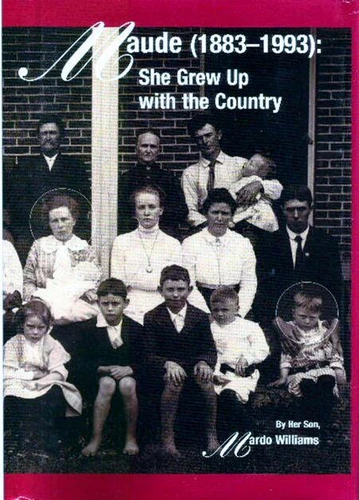
During her 110-year lifetime, Maude Allen Williams went from oil lamps to a microwave oven, from the horse and buggy to an automobile. She stepped onto an airplane for the first time at age 77. Maude was married at 19, four months pregnant, to Lee Williams. She once said her Puritan forefathers might not have approved. The cold winds of winter and the hot winds of summer blew under the ill-fitting doors of the family's sprawling, story-and-a-half, 10-room farmhouse on the banks of Rush Creek.
It had been built in 1853 by Lee's grandfather on a Congressional land grant. The couple had no electricity, no indoor plumbing. While her husband plowed and planted the fields, Maude baked bread in the oven of her temperamental 400-pound wood-burning Kalamazoo stove, churned butter, canned fruits from the orchard and vegetables from the garden, did the laundry on a washboard until after her four youngsters were potty trained, made their clothes by hand from flour sacks, and read to them by lamplight.
Labor was dawn-to-dusk, but there were compensations: the view of the creek from the shady front porch, spectacular sunrises and sunsets, terrifying storms, and the caroling of birds (except during the winter months when the landscape was a Christmasy extravaganza). Maude was doctor, teacher, critic and friend. She taught her children to be self-sufficient, told them of the satisfaction gained of a job well done, and warned that "nothing is free." She taught them to love the smell of the overturned earth, the song of the robin at daybreak, of the whippoorwill in the gathering dusk, and even the croaking of frogs which shattered the peace of August nights as hundreds staged their own overture from the farm creek across the way.
She never drove a car (although her husband bought a Chevrolet in 1920). She refused to get into a bathing suit, considered holding hands in public a sign of bad taste. As a free thinker, she welcomed the advent of women's suffrage. She voted for Warren G. Harding for President in 1920--the year that women got the vote--and cast her ballot in every Presidential election for the remainder of her life.
The book is history and biography, and includes the effects of two world wars and a major depression on the life of the couple. It also reveals intimate details of the family's life: how Maude subdued her joke-playing husband on their wedding night and other humorous incidents . The couple stood by one another as they survived illnesses, tragedies (two murders and a suicide), and financial losses.
The popular sayings of the period, the prices of goods, and superstitions of the day are sidelights. Enterprising, adventurous, and adaptable, Maude met every change and challenge with the spirit of adventure."Mardo Williams brings out the extraordinary in a seemingly ordinary century's worth of experiences in his fine biography of Maude."-Leonard Lopate, New York & Co., National Public Radio"Because he was patient with the details, the scenes, the landscape of character, the author came away with an engaging and fascinating work of a courageous woman..." -Mike Harden, Columbus Dispatch"Maude .


 , qui est-ce ?