SOLDES
Jusqu'à -70% sur une sélection d'articles*

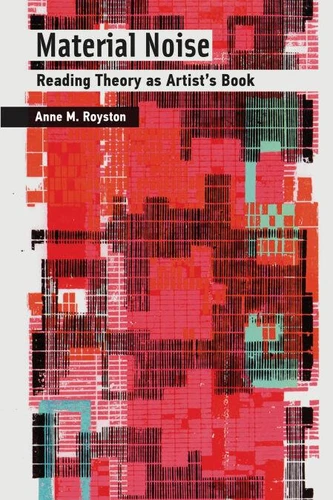
Material Noise. Reading Theory as Artist's Book
Par :Formats :
Disponible dans votre compte client Decitre ou Furet du Nord dès validation de votre commande. Le format ePub protégé est :
- Compatible avec une lecture sur My Vivlio (smartphone, tablette, ordinateur)
- Compatible avec une lecture sur liseuses Vivlio
- Pour les liseuses autres que Vivlio, vous devez utiliser le logiciel Adobe Digital Edition. Non compatible avec la lecture sur les liseuses Kindle, Remarkable et Sony
- Non compatible avec un achat hors France métropolitaine
 , qui est-ce ?
Notre partenaire de plateforme de lecture numérique où vous retrouverez l'ensemble de vos ebooks gratuitement
Pour en savoir plus sur nos ebooks, consultez notre aide en ligne ici
C'est si simple ! Lisez votre ebook avec l'app Vivlio sur votre tablette, mobile ou ordinateur :

- Nombre de pages224
- FormatePub
- ISBN978-0-262-35496-7
- EAN9780262354967
- Date de parution01/10/2019
- Protection num.Adobe DRM
- Taille14 Mo
- Infos supplémentairesepub
- ÉditeurThe MIT Press
Résumé
An argument that theoretical works can signify through their materiality-their "noise, " or such nonsemantic elements as typography-as well as their semantic content. In Material Noise, Anne Royston argues that theoretical works signify through their materiality-such nonsemantic elements as typography or color-as well as their semantic content. Examining works by Jacques Derrida, Avital Ronell, Georges Bataille, and other well-known theorists, Royston considers their materiality and design-which she terms "noise"-as integral to their meaning.
In other words, she reads these theoretical works as complex assemblages, just as she would read an artist's book in all its idiosyncratic tangibility. Royston explores the formlessness and heterogeneity of the Encyclopedia Da Costa, which published works by Bataille, André Breton, and others; the use of layout and white space in Derrida's Glas; the typographic illegibility-"static and interference"-in Ronell's The Telephone Book; and the enticing surfaces of Mark C.
Taylor's Hiding, its digital counterpart The Réal: Las Vegas, NV, and Shelley Jackson's Skin. Royston then extends her analysis to other genres, examining two recent artists' books that express explicit theoretical concerns: Johanna Drucker's Stochastic Poetics and Susan Howe's Tom Tit Tot. Throughout, Royston develops the concept of artistic arguments, which employ signification that exceeds the semantics of a printed text and are not reducible to a series of linear logical propositions.
Artistic arguments foreground their materiality and reflect on the media that create them. Moreover, Royston argues, each artistic argument anticipates some aspect of digital thinking, speaking directly to such contemporary concerns as hypertext, communication theory, networks, and digital distribution.
In other words, she reads these theoretical works as complex assemblages, just as she would read an artist's book in all its idiosyncratic tangibility. Royston explores the formlessness and heterogeneity of the Encyclopedia Da Costa, which published works by Bataille, André Breton, and others; the use of layout and white space in Derrida's Glas; the typographic illegibility-"static and interference"-in Ronell's The Telephone Book; and the enticing surfaces of Mark C.
Taylor's Hiding, its digital counterpart The Réal: Las Vegas, NV, and Shelley Jackson's Skin. Royston then extends her analysis to other genres, examining two recent artists' books that express explicit theoretical concerns: Johanna Drucker's Stochastic Poetics and Susan Howe's Tom Tit Tot. Throughout, Royston develops the concept of artistic arguments, which employ signification that exceeds the semantics of a printed text and are not reducible to a series of linear logical propositions.
Artistic arguments foreground their materiality and reflect on the media that create them. Moreover, Royston argues, each artistic argument anticipates some aspect of digital thinking, speaking directly to such contemporary concerns as hypertext, communication theory, networks, and digital distribution.