SOLDES
Jusqu'à -70% sur une sélection d'articles*

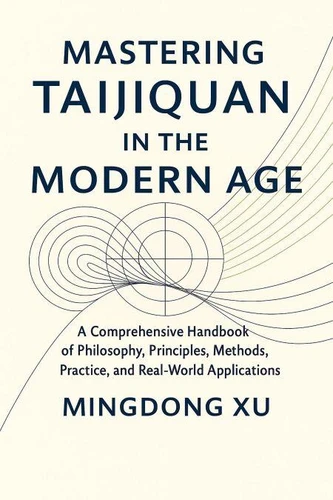
Mastering Taijiquan in the Modern Age
Par :Formats :
Disponible dans votre compte client Decitre ou Furet du Nord dès validation de votre commande. Le format ePub est :
- Compatible avec une lecture sur My Vivlio (smartphone, tablette, ordinateur)
- Compatible avec une lecture sur liseuses Vivlio
- Pour les liseuses autres que Vivlio, vous devez utiliser le logiciel Adobe Digital Edition. Non compatible avec la lecture sur les liseuses Kindle, Remarkable et Sony
 , qui est-ce ?
Notre partenaire de plateforme de lecture numérique où vous retrouverez l'ensemble de vos ebooks gratuitement
Pour en savoir plus sur nos ebooks, consultez notre aide en ligne ici
C'est si simple ! Lisez votre ebook avec l'app Vivlio sur votre tablette, mobile ou ordinateur :

- FormatePub
- ISBN8999324900
- EAN9798999324900
- Date de parution08/01/2026
- Protection num.pas de protection
- Infos supplémentairesepub
- ÉditeurHouse of Baqiao
Résumé
Mastering Taijiquan in the Modern Age offers a comprehensive and systematic reexamination of Taijiquan as a disciplined field of study grounded in observable interactions between mind, muscles, and movement. Rather than treating Taijiquan solely as a traditional martial art or a collection of fixed forms, this book presents it as a structured body of principles that can be studied, tested, refined, and applied across diverse contexts.
Drawing on more than fifty years of practice and interdisciplinary study, the author integrates historical analysis, philosophical inquiry, and experiential experimentation to address long-standing ambiguities in Taijiquan theory. Core concepts such as Jin, Yi, and Relaxation are redefined using clear, operational language, while new conceptual constructs-including External Force, Integration, and Synchronization-are introduced to fill gaps left by fragmented or metaphor-driven explanations.
Traditional symbolic frameworks, particularly Yin-Yang and related philosophical constructs, are examined critically and repositioned as historical and heuristic tools rather than explanatory mechanisms. The book is organized into eight parts. It begins with a realistic exploration of Taijiquan's historical background and cultural development, followed by an overview of mainstream practice, styles, forms, and performance conventions.
Subsequent sections focus on foundational principles governing mind-body interaction, the mechanics of movement and power, and the martial applications of Taijiquan through skills such as Push-Hands. The latter portions of the book outline staged training phases, discuss the integration of Taijiquan principles into daily life, and propose future directions for research and application. A central feature of this work is its emphasis on self-testable methods and experiential verification.
Readers are guided to treat their own bodies as experimental systems, transforming practice into a structured process of observation, controlled variation, and reasoning. This approach enables practitioners to distinguish principles from forms, mechanisms from appearances, and functional outcomes from stylistic expression. Intended for experienced practitioners, educators, and researchers from related fields, Mastering Taijiquan in the Modern Age introduces a modern framework for "Scientist-Practitioners." It positions Taijiquan not as a fixed tradition bound by authority or mysticism, but as an evolving discipline open to inquiry, experimentation, and refinement within a contemporary intellectual framework.
Drawing on more than fifty years of practice and interdisciplinary study, the author integrates historical analysis, philosophical inquiry, and experiential experimentation to address long-standing ambiguities in Taijiquan theory. Core concepts such as Jin, Yi, and Relaxation are redefined using clear, operational language, while new conceptual constructs-including External Force, Integration, and Synchronization-are introduced to fill gaps left by fragmented or metaphor-driven explanations.
Traditional symbolic frameworks, particularly Yin-Yang and related philosophical constructs, are examined critically and repositioned as historical and heuristic tools rather than explanatory mechanisms. The book is organized into eight parts. It begins with a realistic exploration of Taijiquan's historical background and cultural development, followed by an overview of mainstream practice, styles, forms, and performance conventions.
Subsequent sections focus on foundational principles governing mind-body interaction, the mechanics of movement and power, and the martial applications of Taijiquan through skills such as Push-Hands. The latter portions of the book outline staged training phases, discuss the integration of Taijiquan principles into daily life, and propose future directions for research and application. A central feature of this work is its emphasis on self-testable methods and experiential verification.
Readers are guided to treat their own bodies as experimental systems, transforming practice into a structured process of observation, controlled variation, and reasoning. This approach enables practitioners to distinguish principles from forms, mechanisms from appearances, and functional outcomes from stylistic expression. Intended for experienced practitioners, educators, and researchers from related fields, Mastering Taijiquan in the Modern Age introduces a modern framework for "Scientist-Practitioners." It positions Taijiquan not as a fixed tradition bound by authority or mysticism, but as an evolving discipline open to inquiry, experimentation, and refinement within a contemporary intellectual framework.