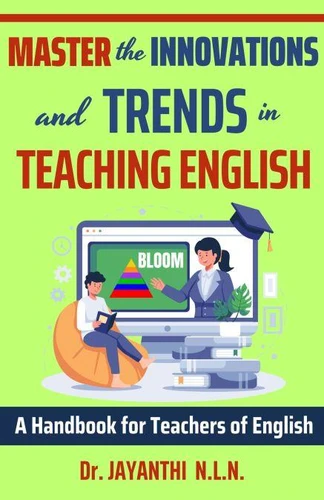
Master the Innovations and Trends in Teaching English. Pedagogy of English, #2
Par :Formats :
Disponible dans votre compte client Decitre ou Furet du Nord dès validation de votre commande. Le format ePub est :
- Compatible avec une lecture sur My Vivlio (smartphone, tablette, ordinateur)
- Compatible avec une lecture sur liseuses Vivlio
- Pour les liseuses autres que Vivlio, vous devez utiliser le logiciel Adobe Digital Edition. Non compatible avec la lecture sur les liseuses Kindle, Remarkable et Sony
 , qui est-ce ?
Notre partenaire de plateforme de lecture numérique où vous retrouverez l'ensemble de vos ebooks gratuitement
Pour en savoir plus sur nos ebooks, consultez notre aide en ligne ici
C'est si simple ! Lisez votre ebook avec l'app Vivlio sur votre tablette, mobile ou ordinateur :

- FormatePub
- ISBN8224785551
- EAN9798224785551
- Date de parution16/01/2024
- Protection num.pas de protection
- Infos supplémentairesepub
- ÉditeurDraft2Digital
Résumé
Why should you read this book?This comprehensive guide strives to encompass the essential facets of teaching English as a foreign language, making it an invaluable resource for educators. Tailored to meet the diverse needs of teachers seeking proficiency in contemporary teaching methodologies, the book delves into the latest innovations in English language instruction. Designed with practicality in mind, the book serves as a supportive tool for English teachers by fostering awareness of recent developments in English pedagogy.
It explores the transformative journey from pedagogy to andragogy to heutagogy, elucidating the concepts and stages involved in each. In particular, the chapter scrutinizes Critical Pedagogy, emphasizing the cultivation of independent thinking through this approach. Additionally, the book sheds light on Flanders' Interaction Analysis and Galloway's System of Interaction Analysis, elucidating their implications in teacher education.
The text unfolds various teaching models, such as Bloom's Mastery Learning, Skinner's Operant Training, Bruner's Concept Attainment, Ausubel's Advance Organizer, Glaser's Basic Teaching (Classroom Meeting), Byron Massialas and Benjamin Cox's Social Inquiry, Carl Roger's Non-directive, and William Gordon's Synaptic models. Each model is thoughtfully explained, providing educators with a clear understanding of their applications in the classroom.
Furthermore, the book delves into Activity-Based Instruction, elucidating techniques like Role Play, Simulation, Incident and Case Study methods, Gaming and prioritization exercises, Group Controlled Instruction, Group Interactive Sessions, Cooperative Learning, Group Investigation, and Group Projects. These methods are explored thoroughly, offering practical insights for effective implementation.
The inclusion of New Emerging Media is a highlight, encompassing Tele-Conferencing, Communication Satellites, Computer Networking, Word Processors, Blended Learning, Flipped Classroom, and the classification and use of Artificial Intelligence in instruction. The book aims to maintain clarity, simplicity, and brevity in its descriptions, ensuring that it remains accessible and beneficial to readers without relying on linguistic jargon.
Overall, this book serves as an indispensable guide for those eager to explore and enhance their knowledge of modern English language teaching methodologies.
It explores the transformative journey from pedagogy to andragogy to heutagogy, elucidating the concepts and stages involved in each. In particular, the chapter scrutinizes Critical Pedagogy, emphasizing the cultivation of independent thinking through this approach. Additionally, the book sheds light on Flanders' Interaction Analysis and Galloway's System of Interaction Analysis, elucidating their implications in teacher education.
The text unfolds various teaching models, such as Bloom's Mastery Learning, Skinner's Operant Training, Bruner's Concept Attainment, Ausubel's Advance Organizer, Glaser's Basic Teaching (Classroom Meeting), Byron Massialas and Benjamin Cox's Social Inquiry, Carl Roger's Non-directive, and William Gordon's Synaptic models. Each model is thoughtfully explained, providing educators with a clear understanding of their applications in the classroom.
Furthermore, the book delves into Activity-Based Instruction, elucidating techniques like Role Play, Simulation, Incident and Case Study methods, Gaming and prioritization exercises, Group Controlled Instruction, Group Interactive Sessions, Cooperative Learning, Group Investigation, and Group Projects. These methods are explored thoroughly, offering practical insights for effective implementation.
The inclusion of New Emerging Media is a highlight, encompassing Tele-Conferencing, Communication Satellites, Computer Networking, Word Processors, Blended Learning, Flipped Classroom, and the classification and use of Artificial Intelligence in instruction. The book aims to maintain clarity, simplicity, and brevity in its descriptions, ensuring that it remains accessible and beneficial to readers without relying on linguistic jargon.
Overall, this book serves as an indispensable guide for those eager to explore and enhance their knowledge of modern English language teaching methodologies.