Sam McKegney is a teacher and scholar of Indigenous and Canadian literature at Queen's University.
Niigaanwewidam James Sinclair (Anishinaabe) is Assistant Professor in the departments of English and Native Studies at the University of Manitoba.
Kim Anderson is a Cree/Métis writer, Canada Research Chair in Indigenous Relationships, and Associate Professor in the Department of Family Relations and Applied Nutrition at the University of Guelph.
Alison Calder teaches English at the University of Manitoba and is a winner of the Bronwen Wallace Memorial Award for poetry.
Joanne Arnott (Métis) A Métis/mixed-blood writer, originally from Manitoba.
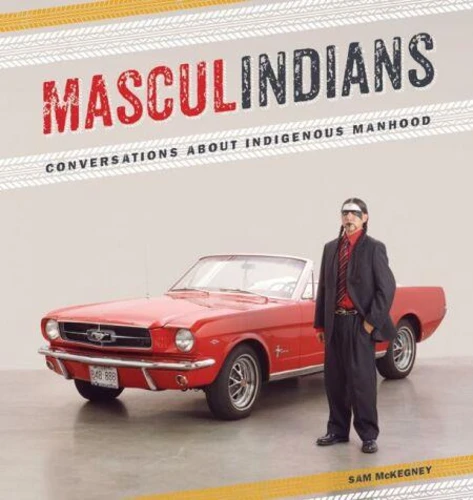
Masculindians. Conversations about Indigenous Manhood
Par : , , , ,Formats :
Disponible dans votre compte client Decitre ou Furet du Nord dès validation de votre commande. Le format ePub est :
- Compatible avec une lecture sur My Vivlio (smartphone, tablette, ordinateur)
- Compatible avec une lecture sur liseuses Vivlio
- Pour les liseuses autres que Vivlio, vous devez utiliser le logiciel Adobe Digital Edition. Non compatible avec la lecture sur les liseuses Kindle, Remarkable et Sony
 , qui est-ce ?
Notre partenaire de plateforme de lecture numérique où vous retrouverez l'ensemble de vos ebooks gratuitement
Pour en savoir plus sur nos ebooks, consultez notre aide en ligne ici
C'est si simple ! Lisez votre ebook avec l'app Vivlio sur votre tablette, mobile ou ordinateur :

- Nombre de pages256
- FormatePub
- ISBN978-0-88755-442-1
- EAN9780887554421
- Date de parution07/02/2014
- Protection num.Digital Watermarking
- Taille6 Mo
- Infos supplémentairesepub
- ÉditeurUniversity of Manitoba Press
Résumé
What does it mean to be an Indigenous man today? Between October 2010 and May 2013, Sam McKegney conducted interviews with leading Indigenous artists, critics, activists, and elders on the subject of Indigenous manhood. In offices, kitchens, and coffee shops, and once in a car driving down the 401, McKegney and his participants tackled crucial questions about masculine self-worth and how to foster balanced and empowered gender relations.
Masculindians captures twenty of these conversations in a volume that is intensely personal, yet speaks across generations, geography, and gender boundaries.
As varied as their speakers, the discussions range from culture, history, and world view to gender theory, artistic representations, and activist interventions. They speak of possibility and strength, of beauty and vulnerability. They speak of sensuality, eroticism, and warriorhood, and of the corrosive influence of shame, racism, and violence. Firmly grounding Indigenous continuance in sacred landscapes, interpersonal reciprocity, and relations with other-than-human kin, these conversations honour and embolden the generative potential of healthy Indigenous masculinities.
As varied as their speakers, the discussions range from culture, history, and world view to gender theory, artistic representations, and activist interventions. They speak of possibility and strength, of beauty and vulnerability. They speak of sensuality, eroticism, and warriorhood, and of the corrosive influence of shame, racism, and violence. Firmly grounding Indigenous continuance in sacred landscapes, interpersonal reciprocity, and relations with other-than-human kin, these conversations honour and embolden the generative potential of healthy Indigenous masculinities.