
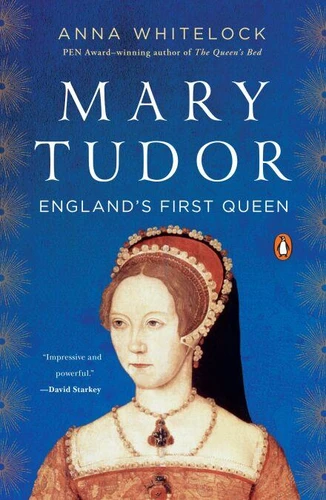
Mary Tudor: England's First Queen
Par :Formats :
Disponible dans votre compte client Decitre ou Furet du Nord dès validation de votre commande. Le format ePub protégé est :
- Compatible avec une lecture sur My Vivlio (smartphone, tablette, ordinateur)
- Compatible avec une lecture sur liseuses Vivlio
- Pour les liseuses autres que Vivlio, vous devez utiliser le logiciel Adobe Digital Edition. Non compatible avec la lecture sur les liseuses Kindle, Remarkable et Sony
- Non compatible avec un achat hors France métropolitaine
 , qui est-ce ?
Notre partenaire de plateforme de lecture numérique où vous retrouverez l'ensemble de vos ebooks gratuitement
Pour en savoir plus sur nos ebooks, consultez notre aide en ligne ici
C'est si simple ! Lisez votre ebook avec l'app Vivlio sur votre tablette, mobile ou ordinateur :

- Nombre de pages432
- FormatePub
- ISBN978-0-698-41119-7
- EAN9780698411197
- Date de parution23/02/2016
- Protection num.Adobe DRM
- Taille15 Mo
- Infos supplémentairesepub
- ÉditeurPenguin Books
Résumé
An engrossing, unadulterated biography of "Bloody Mary"-elder daughter of Henry VIII, Catholic zealot, and England's first reigning Queen Mary Tudor was the first woman to inherit the throne of England. Reigning through one of Britain's stormiest eras, she earned the nickname "Bloody Mary" for her violent religious persecutions. She was born a princess, the daughter of Henry VIII and the Spanish Katherine of Aragon.
Yet in the wake of Henry's break with Rome, Mary, a devout Catholic, was declared illegitimate and was disinherited. She refused to accept her new status or to recognize Henry's new wife, Anne Boleyn, as queen. She faced imprisonment and even death. Mary successfully fought to reclaim her rightful place in the Tudor line, but her coronation would not end her struggles. She flouted fierce opposition in marrying Philip of Spain, sought to restore England to the Catholic faith, and burned hundreds of dissenters at the stake.
But beneath her hard exterior was a woman whose private traumas of phantom pregnancies, debilitating illnesses, and unrequited love played out in the public glare of the fickle court. Though often overshadowed by her long-reigning sister, Elizabeth I, Mary Tudor was a complex figure of immense courage, determination, and humanity-and a political pioneer who proved that a woman could rule with all the power of her male predecessors.
Yet in the wake of Henry's break with Rome, Mary, a devout Catholic, was declared illegitimate and was disinherited. She refused to accept her new status or to recognize Henry's new wife, Anne Boleyn, as queen. She faced imprisonment and even death. Mary successfully fought to reclaim her rightful place in the Tudor line, but her coronation would not end her struggles. She flouted fierce opposition in marrying Philip of Spain, sought to restore England to the Catholic faith, and burned hundreds of dissenters at the stake.
But beneath her hard exterior was a woman whose private traumas of phantom pregnancies, debilitating illnesses, and unrequited love played out in the public glare of the fickle court. Though often overshadowed by her long-reigning sister, Elizabeth I, Mary Tudor was a complex figure of immense courage, determination, and humanity-and a political pioneer who proved that a woman could rule with all the power of her male predecessors.