SOLDES
Jusqu'à -70% sur une sélection d'articles*

Nouveauté
Martina Kiss, Natural Horse 1 /English. A mindful aproach to Horses
Par :Formats :
Disponible dans votre compte client Decitre ou Furet du Nord dès validation de votre commande. Le format PDF est :
- Compatible avec une lecture sur My Vivlio (smartphone, tablette, ordinateur)
- Compatible avec une lecture sur liseuses Vivlio
- Pour les liseuses autres que Vivlio, vous devez utiliser le logiciel Adobe Digital Edition. Non compatible avec la lecture sur les liseuses Kindle, Remarkable et Sony
 , qui est-ce ?
Notre partenaire de plateforme de lecture numérique où vous retrouverez l'ensemble de vos ebooks gratuitement
Pour en savoir plus sur nos ebooks, consultez notre aide en ligne ici
C'est si simple ! Lisez votre ebook avec l'app Vivlio sur votre tablette, mobile ou ordinateur :

- Nombre de pages80
- FormatPDF
- ISBN978-3-95847-501-4
- EAN9783958475014
- Date de parution04/06/2026
- Protection num.Digital Watermarking
- Taille6 Mo
- Infos supplémentairespdf
- ÉditeurCrystal Verlag
Résumé
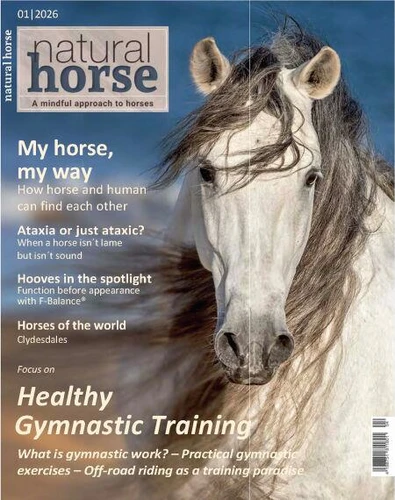
This issue of Natural Horse focuses on mindful, holistic horsemanship and the importance of understanding horses as individuals. Central themes include healthy gymnastic training, communication, hoof care, and the emotional relationship between horse and human.
One major article, "My Horse, My Way" by Petra Haubner, explores how successful partnerships are built through honesty, empathy, and respect for a horse's physical and mental abilities.
The author emphasizes that horses are not "projects" but unique personalities with individual strengths, weaknesses, and emotional needs. Rather than forcing expectations, riders should adapt their goals and training methods to the horse's nature and wellbeing. Another key topic is mindfulness in equestrian life. The magazine discusses how respectful communication between people directly influences horses, as horses are highly sensitive to human emotions and tension.
It criticizes toxic behavior in social media and stable culture and encourages empathy, constructive dialogue, and emotional awareness. Several articles address horse health and movement. Yve Ehler explains that lack of motivation in horses is often linked to pain, stress, trauma, or communication problems rather than laziness. The article highlights the importance of observing subtle behavioral changes and considering both physical and psychological causes. The magazine also introduces innovative approaches to hoof care, such as the F-Balance® method, which focuses on natural hoof function and biomechanics instead of appearance alone.
Other sections discuss ataxia, stretching exercises, epigenetics, riding techniques, and the benefits of gymnastic exercises for maintaining long-term soundness and balance in horses. Overall, the issue promotes compassionate, horse-centered training and responsible horsemanship.
The author emphasizes that horses are not "projects" but unique personalities with individual strengths, weaknesses, and emotional needs. Rather than forcing expectations, riders should adapt their goals and training methods to the horse's nature and wellbeing. Another key topic is mindfulness in equestrian life. The magazine discusses how respectful communication between people directly influences horses, as horses are highly sensitive to human emotions and tension.
It criticizes toxic behavior in social media and stable culture and encourages empathy, constructive dialogue, and emotional awareness. Several articles address horse health and movement. Yve Ehler explains that lack of motivation in horses is often linked to pain, stress, trauma, or communication problems rather than laziness. The article highlights the importance of observing subtle behavioral changes and considering both physical and psychological causes. The magazine also introduces innovative approaches to hoof care, such as the F-Balance® method, which focuses on natural hoof function and biomechanics instead of appearance alone.
Other sections discuss ataxia, stretching exercises, epigenetics, riding techniques, and the benefits of gymnastic exercises for maintaining long-term soundness and balance in horses. Overall, the issue promotes compassionate, horse-centered training and responsible horsemanship.