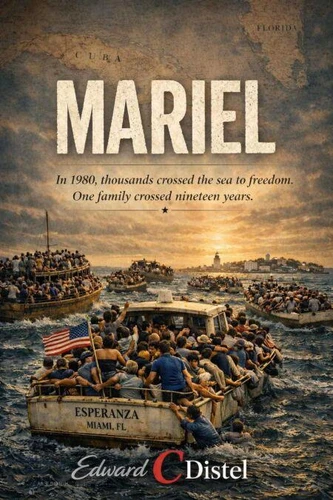
In the spring of 1980, as the port of Mariel opens and a flotilla of small boats carries 125, 000 Cubans toward Florida, attorney Sonia Peraza finds the past she buried refusing to stay there. Sonia built a life in America on distance - from the island she left, from the girl she was, from the grief she never had time to grieve. But the boatlift doesn't just bring strangers to her shores. It brings memory, obligation, and the unfinished business of a family split by a revolution she was too young to understand and too proud to talk about.
As Sonia is drawn into the chaos of the crisis - legal, human, and deeply personal - she has to decide what she owes the people still arriving, the country that shaped her, and the woman she left behind in Havana. Mariel is a literary historical novel about exile, inheritance, and the cost of rebuilding a self across two countries - grounded in one of the most dramatic chapters of the Cuban-American story.
In the spring of 1980, as the port of Mariel opens and a flotilla of small boats carries 125, 000 Cubans toward Florida, attorney Sonia Peraza finds the past she buried refusing to stay there. Sonia built a life in America on distance - from the island she left, from the girl she was, from the grief she never had time to grieve. But the boatlift doesn't just bring strangers to her shores. It brings memory, obligation, and the unfinished business of a family split by a revolution she was too young to understand and too proud to talk about.
As Sonia is drawn into the chaos of the crisis - legal, human, and deeply personal - she has to decide what she owes the people still arriving, the country that shaped her, and the woman she left behind in Havana. Mariel is a literary historical novel about exile, inheritance, and the cost of rebuilding a self across two countries - grounded in one of the most dramatic chapters of the Cuban-American story.