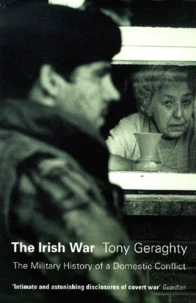
Tony Geraghty, author of the SAS history 'Who Dares Wins', 'The Bullet Catchers' and 'Beyond the Front Line', is himself a military veteran, first with the Paras and then as a British officer in the Gulf conflict. As a liaison officer with US forces he was awarded an American decoration. He is also an Irish citizen.
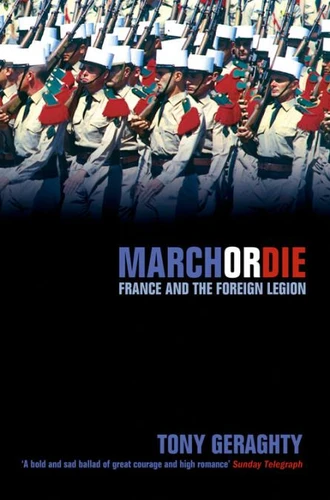
March Or Die. France And The Foreign Legion
Par :Formats :
Disponible dans votre compte client Decitre ou Furet du Nord dès validation de votre commande. Le format ePub protégé est :
- Compatible avec une lecture sur My Vivlio (smartphone, tablette, ordinateur)
- Compatible avec une lecture sur liseuses Vivlio
- Pour les liseuses autres que Vivlio, vous devez utiliser le logiciel Adobe Digital Edition. Non compatible avec la lecture sur les liseuses Kindle, Remarkable et Sony
- Non compatible avec un achat hors France métropolitaine
 , qui est-ce ?
Notre partenaire de plateforme de lecture numérique où vous retrouverez l'ensemble de vos ebooks gratuitement
Pour en savoir plus sur nos ebooks, consultez notre aide en ligne ici
C'est si simple ! Lisez votre ebook avec l'app Vivlio sur votre tablette, mobile ou ordinateur :

- Nombre de pages448
- FormatePub
- ISBN978-0-00-745536-2
- EAN9780007455362
- Date de parution28/06/2012
- Protection num.Adobe DRM
- Infos supplémentairesepub
- ÉditeurHarperCollins
Résumé
A thoroughly updated history of the legendary French Foreign Legion by the bestselling author of Who Dares Wins
Tony Geraghty analyses the legend and re-examines the battle honours of the Foreign Legion, and his revelations illuminate the darker side of its historic relationship to the motherland. Called into being in 1831 as a device to absorb the footloose veterans of Napoleon's old armies, the French Foreign Legion subsequently won astonishing victories in the farflung battlefields of Spain, the Crimea, Algeria and Morrocco, Italy, Mexico, Syria, Indo-China, Madagascar, and West and Central Africa.
March or Die also traces the Legion's diminished fortunes in recent years.
It has fought in the Gulf War, Rwanda and Kosovo among other conflicts, but has found itself in 'a world of political correctness which left the Legion marooned on an island of admirable but anachronistic values'. Forced to accept women in its ranks and no longer unique now that conscription has been abolished, it is searching for its place in the modern world.
It has fought in the Gulf War, Rwanda and Kosovo among other conflicts, but has found itself in 'a world of political correctness which left the Legion marooned on an island of admirable but anachronistic values'. Forced to accept women in its ranks and no longer unique now that conscription has been abolished, it is searching for its place in the modern world.