SOLDES
Jusqu'à -70% sur une sélection d'articles*

Nouveauté
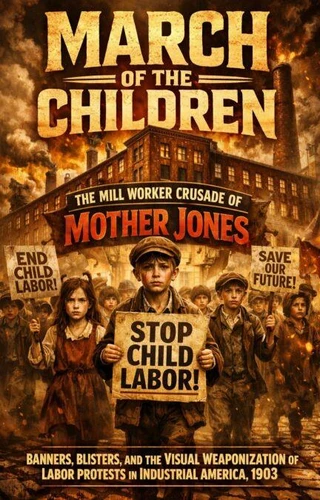
March of the Children: The Mill Worker Crusade of Mother Jones. Banners, Blisters, and the Visual Weaponization of Labor Protests in Industrial America, 1903
Par :Formats :
Disponible dans votre compte client Decitre ou Furet du Nord dès validation de votre commande. Le format ePub est :
- Compatible avec une lecture sur My Vivlio (smartphone, tablette, ordinateur)
- Compatible avec une lecture sur liseuses Vivlio
- Pour les liseuses autres que Vivlio, vous devez utiliser le logiciel Adobe Digital Edition. Non compatible avec la lecture sur les liseuses Kindle, Remarkable et Sony
 , qui est-ce ?
Notre partenaire de plateforme de lecture numérique où vous retrouverez l'ensemble de vos ebooks gratuitement
Pour en savoir plus sur nos ebooks, consultez notre aide en ligne ici
C'est si simple ! Lisez votre ebook avec l'app Vivlio sur votre tablette, mobile ou ordinateur :

- Nombre de pages184
- FormatePub
- ISBN978-3-565-49733-1
- EAN9783565497331
- Date de parution14/06/2026
- Protection num.pas de protection
- Taille630 Ko
- Infos supplémentairesepub
- ÉditeurEmphaloz Publishing House
Résumé
How do you force a deeply corrupt, heavily bribed government to care about the horrific exploitation of its most vulnerable citizens? In 1903, a fierce labor organizer named Mary Harris "Mother" Jones realized that statistics and quiet lobbying were utterly useless. She needed an undeniable visual spectacle to shame the nation into action.
To expose the gruesome reality of child labor in the textile mills, Jones organized the "March of the Mill Children." She led a grueling, multi-week protest march of mutilated, exhausted child workers from Philadelphia directly to the Long Island home of President Theodore Roosevelt.
While the President refused to meet with them, the march was a masterclass in political optics. The harrowing photographs of children missing fingers and crushed by exhaustion were plastered across national newspapers, sparking an unstoppable wave of public outrage. This gripping historical narrative dissects the birth of modern protest media. It explores the brutal economic conditions of the textile industry, the psychological manipulation of public sympathy, and the fearless tactics of a woman who weaponized optics to fight corporate greed. Witness the birth of visual activism.
The 1903 children's march proves that raw, undeniable imagery is often the only weapon capable of piercing through institutional apathy and forcing legislative change.
While the President refused to meet with them, the march was a masterclass in political optics. The harrowing photographs of children missing fingers and crushed by exhaustion were plastered across national newspapers, sparking an unstoppable wave of public outrage. This gripping historical narrative dissects the birth of modern protest media. It explores the brutal economic conditions of the textile industry, the psychological manipulation of public sympathy, and the fearless tactics of a woman who weaponized optics to fight corporate greed. Witness the birth of visual activism.
The 1903 children's march proves that raw, undeniable imagery is often the only weapon capable of piercing through institutional apathy and forcing legislative change.