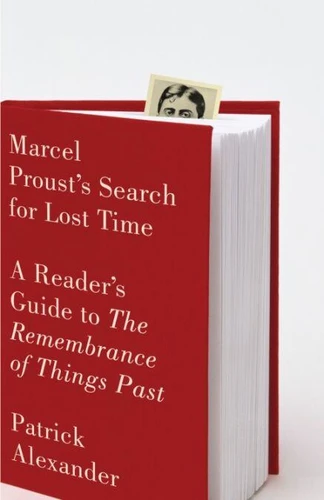
Marcel Proust's Search for Lost Time. A Reader's Guide to The Remembrance of Things Past
Par :Formats :
Disponible dans votre compte client Decitre ou Furet du Nord dès validation de votre commande. Le format ePub protégé est :
- Compatible avec une lecture sur My Vivlio (smartphone, tablette, ordinateur)
- Compatible avec une lecture sur liseuses Vivlio
- Pour les liseuses autres que Vivlio, vous devez utiliser le logiciel Adobe Digital Edition. Non compatible avec la lecture sur les liseuses Kindle, Remarkable et Sony
- Non compatible avec un achat hors France métropolitaine
 , qui est-ce ?
Notre partenaire de plateforme de lecture numérique où vous retrouverez l'ensemble de vos ebooks gratuitement
Pour en savoir plus sur nos ebooks, consultez notre aide en ligne ici
C'est si simple ! Lisez votre ebook avec l'app Vivlio sur votre tablette, mobile ou ordinateur :

- Nombre de pages400
- FormatePub
- ISBN978-0-307-47560-2
- EAN9780307475602
- Date de parution22/09/2009
- Protection num.Adobe DRM
- Taille3 Mo
- Infos supplémentairesepub
- ÉditeurVintage
Résumé
An accessible, irreverent guide to one of the most admired-and entertaining-novels of the past century: Rememberance of Things Past. There is no other guide like this; a user-friendly and enticing entry into the marvelously enjoyable world of Proust. At seven volumes, three thousand pages, and more than four hundred characters, as well as a towering reputation as a literary classic, Proust's novel can seem daunting.
But though begun a century ago, in 1909, it is in fact as engaging and relevant to our times as ever. Patrick Alexander is passionate about Proust's genius and appeal-he calls the work "outrageously bawdy and extremely funny"-and in his guide he makes it more accessible to the general reader through detailed plot summaries, historical and cultural background, a guide to the fifty most important characters, maps, family trees, illustrations, and a brief biography of Proust.
Essential for readers and book groups currently reading Proust and who want help keeping track of the huge cast and intricate plot, this Reader's Guide is also a wonderful introduction for students and new readers and a memory-refresher for long-time fans.
But though begun a century ago, in 1909, it is in fact as engaging and relevant to our times as ever. Patrick Alexander is passionate about Proust's genius and appeal-he calls the work "outrageously bawdy and extremely funny"-and in his guide he makes it more accessible to the general reader through detailed plot summaries, historical and cultural background, a guide to the fifty most important characters, maps, family trees, illustrations, and a brief biography of Proust.
Essential for readers and book groups currently reading Proust and who want help keeping track of the huge cast and intricate plot, this Reader's Guide is also a wonderful introduction for students and new readers and a memory-refresher for long-time fans.