SOLDES
Jusqu'à -70% sur une sélection d'articles*

Nouveauté
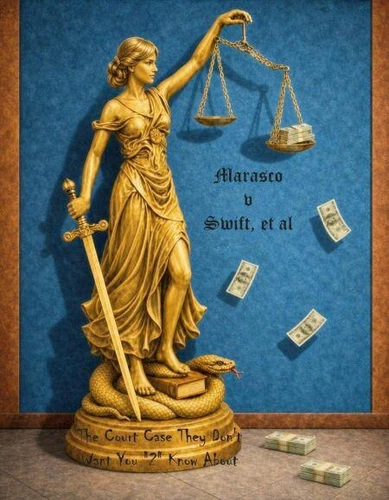
Marasco v Swift, et al: The Federal Case They Don't Want You "2" Know About
Par :Formats :
Disponible dans votre compte client Decitre ou Furet du Nord dès validation de votre commande. Le format ePub est :
- Compatible avec une lecture sur My Vivlio (smartphone, tablette, ordinateur)
- Compatible avec une lecture sur liseuses Vivlio
- Pour les liseuses autres que Vivlio, vous devez utiliser le logiciel Adobe Digital Edition. Non compatible avec la lecture sur les liseuses Kindle, Remarkable et Sony
 , qui est-ce ?
Notre partenaire de plateforme de lecture numérique où vous retrouverez l'ensemble de vos ebooks gratuitement
Pour en savoir plus sur nos ebooks, consultez notre aide en ligne ici
C'est si simple ! Lisez votre ebook avec l'app Vivlio sur votre tablette, mobile ou ordinateur :

- FormatePub
- ISBN8235286375
- EAN9798235286375
- Date de parution28/05/2026
- Protection num.pas de protection
- Infos supplémentairesepub
- ÉditeurIoakim Ioakim
Résumé
This book presents the key court filings from the federal case Marasco v. Swift et al. and offers the author's direct account of a lawsuit that, in her view, received far less public attention than its significance warranted-mentioned only briefly in a single Newsweek column that, as she interpreted it, framed the matter more favorably toward Taylor Swift. Many readers may be familiar with other high-profile disputes involving this same musician-one centered on a song title ("Lover"), another on short phrases ("players gonna play" and "haters gonna hate"), and a more recent trademark case involving a somewhat similar stock title ("Life of a Showgirl").
Yet few have heard of this copyright lawsuit, in which the plaintiff identified multiple verses used by the defendants she believes closely resemble her own original poetic expressions, along with several other substantive similarities that extend well beyond a common title or phrase. When the author turned to the courts to reinforce the protection she had already secured through multiple copyright registrations, she encountered a process far more difficult than she ever anticipated.
What began as a valid copyright claim evolved-through her experience-into a revealing look at influence, financial resources, and the quiet institutional mechanisms through which information can be limited or obscured. Blending memoir, legal narrative, and cultural commentary, the book reflects on how challenging the legal system can be for individuals without wealth, influence, or representation.
This is the story they never expected her to tell-and the one she believes was never meant to be heard. Marasco v. Swift et al. stands as her testament: a record of what she experienced, what the court documents show, and a warning about what can unfold when an ordinary person with limited resources challenges extraordinary power.
Yet few have heard of this copyright lawsuit, in which the plaintiff identified multiple verses used by the defendants she believes closely resemble her own original poetic expressions, along with several other substantive similarities that extend well beyond a common title or phrase. When the author turned to the courts to reinforce the protection she had already secured through multiple copyright registrations, she encountered a process far more difficult than she ever anticipated.
What began as a valid copyright claim evolved-through her experience-into a revealing look at influence, financial resources, and the quiet institutional mechanisms through which information can be limited or obscured. Blending memoir, legal narrative, and cultural commentary, the book reflects on how challenging the legal system can be for individuals without wealth, influence, or representation.
This is the story they never expected her to tell-and the one she believes was never meant to be heard. Marasco v. Swift et al. stands as her testament: a record of what she experienced, what the court documents show, and a warning about what can unfold when an ordinary person with limited resources challenges extraordinary power.