SOLDES
Jusqu'à -70% sur une sélection d'articles*

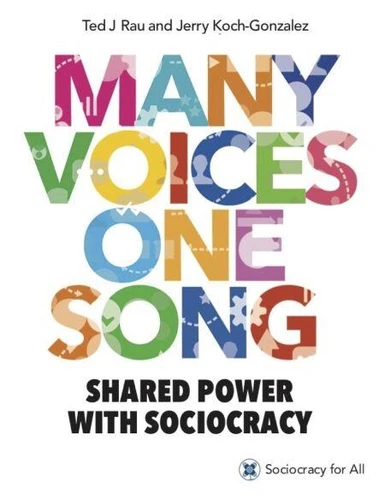
Many Voices, One Song: Shared Power with Sociocracy
Par : ,Formats :
Disponible dans votre compte client Decitre ou Furet du Nord dès validation de votre commande. Le format ePub est :
- Compatible avec une lecture sur My Vivlio (smartphone, tablette, ordinateur)
- Compatible avec une lecture sur liseuses Vivlio
- Pour les liseuses autres que Vivlio, vous devez utiliser le logiciel Adobe Digital Edition. Non compatible avec la lecture sur les liseuses Kindle, Remarkable et Sony
 , qui est-ce ?
Notre partenaire de plateforme de lecture numérique où vous retrouverez l'ensemble de vos ebooks gratuitement
Pour en savoir plus sur nos ebooks, consultez notre aide en ligne ici
C'est si simple ! Lisez votre ebook avec l'app Vivlio sur votre tablette, mobile ou ordinateur :

- FormatePub
- ISBN978-1-949183-02-3
- EAN9781949183023
- Date de parution21/04/2024
- Protection num.pas de protection
- Infos supplémentairesepub
- ÉditeurTed Rau
Résumé
Many Voices One Song is a detailed manual for implementing sociocracy, an egalitarian form of governance also known as dynamic governance. Sociocracy means governance by those who associate together. This book is based on the Sociocratic Circle-Organization Method (SCM) developed in the Netherlands by electrical engineer Gerard Endenburg, based on earlier work of educator Kees Boeke. Many Voices One Song includes step-by-step descriptions for structuring organizations, making decisions, and generating feedback.
The content is illustrated by many diagrams, tables, examples, lists, skits, and stories from the field. The book includes a glossary and index, and an appendix summarizing processes in easily reproducible form. The book covers four major areas: Sociocratic organizational structures based on linked teams (circles) that distribute authority from the top of organizations to the most frontline teams that are appropriate.
These teams are linked by both top-down leaders and bottom-up delegates to ensure that influence and power are shared in a circular rather than linear hierarchy. Organizational diagrams illustrate different ways to structure organizations in an egalitarian way. Decision making by consent, defined as no one having an objection to a proposed decision. Consent is a participatory and inclusive approach to decision making, in contrast to win-lose voting and most forms of consensus.
Decision-making steps (understand-explore-decide) detailed include proposal generation and the proposal to consent decision-making process. The book also outlines the steps for selection of people to roles in open dialog processes. The insights of compassionate communication (Nonviolent Communication/NVC) are integrated into the context of decision making. Meeting format and design, including facilitation skills and processes that ensure that all voices matter in decision making.
Feedback processes for evaluating the effectiveness of meetings, policies, workflows, and role performance support an ongoing learning cycle and continuous improvement, not just in production and delivery but in the embodiment of equality itself. The intent of this book is to contribute to the spread of sociocracy by making information available. Egalitarian self-governance needs to be simple enough so everyone can share power in a healthy way.
The content is illustrated by many diagrams, tables, examples, lists, skits, and stories from the field. The book includes a glossary and index, and an appendix summarizing processes in easily reproducible form. The book covers four major areas: Sociocratic organizational structures based on linked teams (circles) that distribute authority from the top of organizations to the most frontline teams that are appropriate.
These teams are linked by both top-down leaders and bottom-up delegates to ensure that influence and power are shared in a circular rather than linear hierarchy. Organizational diagrams illustrate different ways to structure organizations in an egalitarian way. Decision making by consent, defined as no one having an objection to a proposed decision. Consent is a participatory and inclusive approach to decision making, in contrast to win-lose voting and most forms of consensus.
Decision-making steps (understand-explore-decide) detailed include proposal generation and the proposal to consent decision-making process. The book also outlines the steps for selection of people to roles in open dialog processes. The insights of compassionate communication (Nonviolent Communication/NVC) are integrated into the context of decision making. Meeting format and design, including facilitation skills and processes that ensure that all voices matter in decision making.
Feedback processes for evaluating the effectiveness of meetings, policies, workflows, and role performance support an ongoing learning cycle and continuous improvement, not just in production and delivery but in the embodiment of equality itself. The intent of this book is to contribute to the spread of sociocracy by making information available. Egalitarian self-governance needs to be simple enough so everyone can share power in a healthy way.