
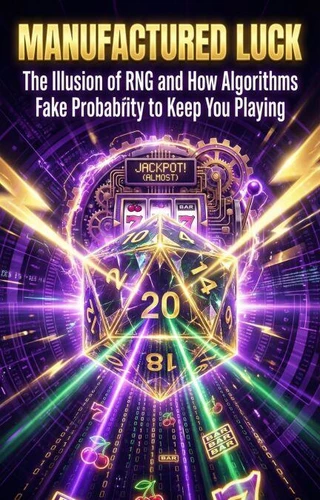
Manufactured Luck. The Illusion of RNG and How Algorithms Fake Probability to Keep You Playing
Par :Formats :
Disponible dans votre compte client Decitre ou Furet du Nord dès validation de votre commande. Le format ePub est :
- Compatible avec une lecture sur My Vivlio (smartphone, tablette, ordinateur)
- Compatible avec une lecture sur liseuses Vivlio
- Pour les liseuses autres que Vivlio, vous devez utiliser le logiciel Adobe Digital Edition. Non compatible avec la lecture sur les liseuses Kindle, Remarkable et Sony
 , qui est-ce ?
Notre partenaire de plateforme de lecture numérique où vous retrouverez l'ensemble de vos ebooks gratuitement
Pour en savoir plus sur nos ebooks, consultez notre aide en ligne ici
C'est si simple ! Lisez votre ebook avec l'app Vivlio sur votre tablette, mobile ou ordinateur :

- Nombre de pages187
- FormatePub
- ISBN978-3-565-29573-9
- EAN9783565295739
- Date de parution05/03/2026
- Protection num.pas de protection
- Taille885 Ko
- Infos supplémentairesepub
- ÉditeurEmphaloz Publishing House
Résumé
When you land a critical hit in an RPG or draw the perfect card in a digital deckbuilder, it feels like a stroke of sheer luck. But behind the scenes, the game's Random Number Generator (RNG) is constantly lying to you. True randomness is profoundly frustrating, so game developers actively cheat to make you feel lucky.
The Illusion of RNG is a cornerstone of modern game balancing. Humans are terrible at understanding statistics; if an action has a 90% chance to succeed and fails twice in a row, players feel cheated.
To prevent rage-quitting, designers implement "pseudo-random distribution, " manipulating the invisible dice rolls in the background. Pity timers guarantee rare loot, and missed shots secretly increase the accuracy of your next attempt. This book exposes the psychological math underlying virtual chance. It examines how games manage player frustration, balance difficulty through hidden statistical bumpers, and engineer the perfect cadence of risk and reward. Peek behind the digital curtain of probability.
Understand how algorithms protect your ego by manipulating chance, and why true randomness is the enemy of a good time.
To prevent rage-quitting, designers implement "pseudo-random distribution, " manipulating the invisible dice rolls in the background. Pity timers guarantee rare loot, and missed shots secretly increase the accuracy of your next attempt. This book exposes the psychological math underlying virtual chance. It examines how games manage player frustration, balance difficulty through hidden statistical bumpers, and engineer the perfect cadence of risk and reward. Peek behind the digital curtain of probability.
Understand how algorithms protect your ego by manipulating chance, and why true randomness is the enemy of a good time.