
Dr. Volkhard Wels, geb. 1964, ist Privatdozent an der Universität Potsdam und wissenschaftlicher Mitarbeiter an der Freien Universität Berlin. Seine Forschungsschwerpunkte liegen im Bereich der Frühen Neuzeit. Zu seinen Veröffentlichungen gehören Arbeiten zur humanistischen Reform des universitären Lehrplans und zur Geschichte der Poetik.
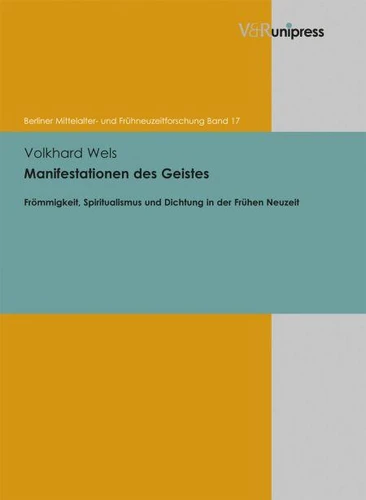
Manifestationen des Geistes. Frömmigkeit, Spiritualismus und Dichtung in der Frühen Neuzeit
Par : ,Formats :
Disponible dans votre compte client Decitre ou Furet du Nord dès validation de votre commande. Le format PDF est :
- Compatible avec une lecture sur My Vivlio (smartphone, tablette, ordinateur)
- Compatible avec une lecture sur liseuses Vivlio
- Pour les liseuses autres que Vivlio, vous devez utiliser le logiciel Adobe Digital Edition. Non compatible avec la lecture sur les liseuses Kindle, Remarkable et Sony
 , qui est-ce ?
Notre partenaire de plateforme de lecture numérique où vous retrouverez l'ensemble de vos ebooks gratuitement
Pour en savoir plus sur nos ebooks, consultez notre aide en ligne ici
C'est si simple ! Lisez votre ebook avec l'app Vivlio sur votre tablette, mobile ou ordinateur :

- Nombre de pages403
- FormatPDF
- ISBN978-3-8470-0214-7
- EAN9783847002147
- Date de parution11/12/2013
- Protection num.pas de protection
- Taille4 Mo
- Infos supplémentairespdf
- ÉditeurV&R Unipress
Résumé
Im Mittelpunkt des Buches steht der Spiritualismus der Frühen Neuzeit, verstanden als die Annahme einer >geistigen<, spirituellen Gegenwart Gottes. Dieser Spiritualismus kann sich in der Theologie etwa als Berufung auf göttliche Inspiration äußern, in der Medizin, Alchemie und Naturphilosophie im Begriff einer göttlich beseelten Natur und in der Literatur als geistliche, erbauliche Dichtung. Spiritualistische Tendenzen spielen dabei nicht nur in der frühneuzeitlichen Magie, Kabbala und Hermetik, im Paracelsismus und Rosenkreuzertum eine tragende Rolle, sondern auch in ihrer Opposition zu den entstehenden >Naturwissenschaften< mit ihrem mechanistischen Naturbegriff und ihrem Rationalismus.
Dieser bildet ein wichtiges Element der sich konstituierenden >Aufklärung<, während auf der anderen Seite der Spiritualismus in den Pietismus mündet. This volume focusses on spiritualism in early modernity, the term meaning the assumption of the >spiritual< presence of God. This form of spiritualism can be expressed in theology as an invocation of divine inspiration, in medicine, alchemy and natural philosophy as divinely endowed nature, and in literature as spiritual, uplifting poetry.
Spiritual tendencies play a major role not only in early modern magic, Kabbalah and Hermeticism, Paracelsism and Rosicrucianism, but also in their opposition to the emerging »natural sciences« with their mechanistic understanding of nature and their rationalism. Towards the end of the 17th century, rationalism becomes the real adversary of spiritualism. While spiritualism was now primarily articulated through piety, rationalism became a constitutive element of the Enlightenment that now began to take shape.
Dieser bildet ein wichtiges Element der sich konstituierenden >Aufklärung<, während auf der anderen Seite der Spiritualismus in den Pietismus mündet. This volume focusses on spiritualism in early modernity, the term meaning the assumption of the >spiritual< presence of God. This form of spiritualism can be expressed in theology as an invocation of divine inspiration, in medicine, alchemy and natural philosophy as divinely endowed nature, and in literature as spiritual, uplifting poetry.
Spiritual tendencies play a major role not only in early modern magic, Kabbalah and Hermeticism, Paracelsism and Rosicrucianism, but also in their opposition to the emerging »natural sciences« with their mechanistic understanding of nature and their rationalism. Towards the end of the 17th century, rationalism becomes the real adversary of spiritualism. While spiritualism was now primarily articulated through piety, rationalism became a constitutive element of the Enlightenment that now began to take shape.
A propos de Volkhard Wels
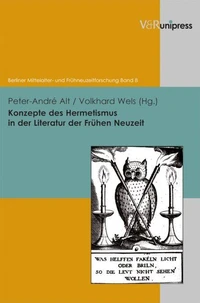
Konzepte des Hermetismus
E-book
95,00 €