
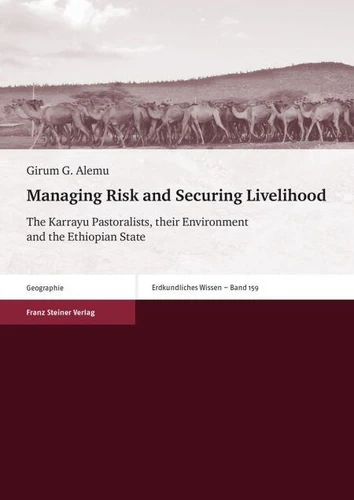
Managing Risk and Securing Livelihood. The Karrayu Pastoralists, their Environment and the Ethiopian State
Par :Formats :
Disponible dans votre compte client Decitre ou Furet du Nord dès validation de votre commande. Le format PDF est :
- Compatible avec une lecture sur My Vivlio (smartphone, tablette, ordinateur)
- Compatible avec une lecture sur liseuses Vivlio
- Pour les liseuses autres que Vivlio, vous devez utiliser le logiciel Adobe Digital Edition. Non compatible avec la lecture sur les liseuses Kindle, Remarkable et Sony
 , qui est-ce ?
Notre partenaire de plateforme de lecture numérique où vous retrouverez l'ensemble de vos ebooks gratuitement
Pour en savoir plus sur nos ebooks, consultez notre aide en ligne ici
C'est si simple ! Lisez votre ebook avec l'app Vivlio sur votre tablette, mobile ou ordinateur :

- Nombre de pages187
- FormatPDF
- ISBN978-3-515-11405-9
- EAN9783515114059
- Date de parution07/06/2016
- Protection num.Digital Watermarking
- Taille3 Mo
- Infos supplémentairespdf
- ÉditeurFranz Steiner
Résumé
The hegemonic perspective on adaptation solely focuses on climate stimuli as the driving force behind people's adaptation. Such a perspective underestimates the role played by historical trajectories of political and social forces of change in shaping current adaptation practices. In doing so, it also separates the environment from processes of social change. This work challenges this dominant view by arguing that adaptation practices pursued by pastoral communities need to be seen at the intersection of state-environment-pastoralists-interactions.
In other words, the understanding of pastoralists' risk management and livelihood practices requires a perspective that situates local actors into their broader socio-political and environmental contexts. By using a political ecology approach that emphasizes on the agency of pastoral actors, this work demonstrates how the Karrayyu pastoral groups of upper Awash valley develop and use various risk management and livelihood practices under the influence of both socio-political and ecological sources of change.
In other words, the understanding of pastoralists' risk management and livelihood practices requires a perspective that situates local actors into their broader socio-political and environmental contexts. By using a political ecology approach that emphasizes on the agency of pastoral actors, this work demonstrates how the Karrayyu pastoral groups of upper Awash valley develop and use various risk management and livelihood practices under the influence of both socio-political and ecological sources of change.