Erika Dyck is a historian of health, medicine, and Canadian society at the University of Saskatchewan. Her research has concentrated on the history of mental health, institutionalization, and experimentation.
Alex Deighton is a graduate student in History at the University of Saskatchewan.
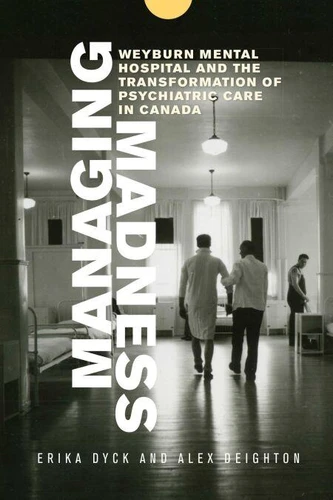
Managing Madness. Weyburn Mental Hospital and the Transformation of Psychiatric Care in Canada
Par : , , , ,Formats :
Disponible dans votre compte client Decitre ou Furet du Nord dès validation de votre commande. Le format ePub est :
- Compatible avec une lecture sur My Vivlio (smartphone, tablette, ordinateur)
- Compatible avec une lecture sur liseuses Vivlio
- Pour les liseuses autres que Vivlio, vous devez utiliser le logiciel Adobe Digital Edition. Non compatible avec la lecture sur les liseuses Kindle, Remarkable et Sony
 , qui est-ce ?
Notre partenaire de plateforme de lecture numérique où vous retrouverez l'ensemble de vos ebooks gratuitement
Pour en savoir plus sur nos ebooks, consultez notre aide en ligne ici
C'est si simple ! Lisez votre ebook avec l'app Vivlio sur votre tablette, mobile ou ordinateur :

- FormatePub
- ISBN978-0-88755-535-0
- EAN9780887555350
- Date de parution22/09/2017
- Protection num.Digital Watermarking
- Taille5 Mo
- Infos supplémentairesepub
- ÉditeurUniversity of Manitoba Press
Résumé
The Saskatchewan Mental Hospital at Weyburn has played a significant role in the history of psychiatric services, mental health research, and providing care in the community. Its history provides a window to the changing nature of mental health services over the 20th century.
Built in 1921, Saskatchewan Mental Hospital was considered the last asylum in North America and the largest facility of its kind in the British Commonwealth.
A decade later the Canadian Committee for Mental Hygiene cited it as one of the worst facilities in the country, largely due to extreme overcrowding. In the 1950s the Saskatchewan Mental Hospital again attracted international attention for engaging in controversial therapeutic interventions, including treatments using LSD. In the 1960s, sweeping healthcare reforms took hold in the province and mental health institutions underwent dramatic changes as they began transferring patients into communities.
As the patient and staff population shrunk, the once palatial building fell into disrepair, the asylum's expansive farmland went out of cultivation, and mental health services folded into a complicated web of social and correctional services. Erika Dyck's Managing Madness examines an institution that housed people we struggle to understand, help, or even try to change.
A decade later the Canadian Committee for Mental Hygiene cited it as one of the worst facilities in the country, largely due to extreme overcrowding. In the 1950s the Saskatchewan Mental Hospital again attracted international attention for engaging in controversial therapeutic interventions, including treatments using LSD. In the 1960s, sweeping healthcare reforms took hold in the province and mental health institutions underwent dramatic changes as they began transferring patients into communities.
As the patient and staff population shrunk, the once palatial building fell into disrepair, the asylum's expansive farmland went out of cultivation, and mental health services folded into a complicated web of social and correctional services. Erika Dyck's Managing Madness examines an institution that housed people we struggle to understand, help, or even try to change.