SOLDES
Jusqu'à -70% sur une sélection d'articles*

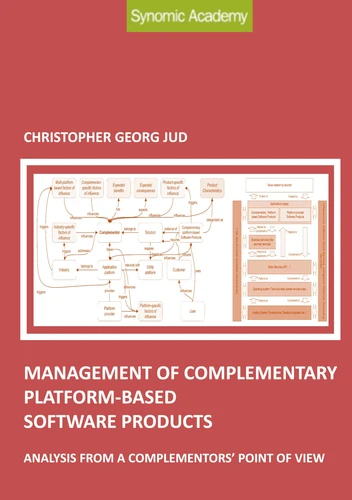
Management of complementary platform-based software products. Analysis from a complementors point of view
Par :Formats :
Disponible dans votre compte client Decitre ou Furet du Nord dès validation de votre commande. Le format ePub protégé est :
- Compatible avec une lecture sur My Vivlio (smartphone, tablette, ordinateur)
- Compatible avec une lecture sur liseuses Vivlio
- Pour les liseuses autres que Vivlio, vous devez utiliser le logiciel Adobe Digital Edition. Non compatible avec la lecture sur les liseuses Kindle, Remarkable et Sony
- Non compatible avec un achat hors France métropolitaine
 , qui est-ce ?
Notre partenaire de plateforme de lecture numérique où vous retrouverez l'ensemble de vos ebooks gratuitement
Pour en savoir plus sur nos ebooks, consultez notre aide en ligne ici
C'est si simple ! Lisez votre ebook avec l'app Vivlio sur votre tablette, mobile ou ordinateur :

- Nombre de pages396
- FormatePub
- ISBN978-3-7526-1871-6
- EAN9783752618716
- Date de parution30/12/2020
- Protection num.Adobe DRM
- Taille4 Mo
- Infos supplémentairesepub
- ÉditeurC. M. Willberg
Résumé
The concept of platforms emerges in an increasing number of industries and affects customers' changing expectations, industries themselves, and new technologies' availability.
Today, most platforms act as a technical foundation and distribution channel for complementary software products. Organizations can join platforms and use them to develop and distribute software products. They become complementors on the platforms.
Platforms influence the motivations as well as the organization and affects software products of the complementors. Among other things, when using platforms, complementors must accept the platforms' specifications (for example, the technologies to be used). These requirements lead to additional work for complementors. The effort for complementors increases if software products are to be offered in parallel on multiple platforms.
This publication examines how platforms affect organizations that use multiple platforms. It gives organizations recommendations for action on how to accommodate the platforms' influence.
Platforms influence the motivations as well as the organization and affects software products of the complementors. Among other things, when using platforms, complementors must accept the platforms' specifications (for example, the technologies to be used). These requirements lead to additional work for complementors. The effort for complementors increases if software products are to be offered in parallel on multiple platforms.
This publication examines how platforms affect organizations that use multiple platforms. It gives organizations recommendations for action on how to accommodate the platforms' influence.