
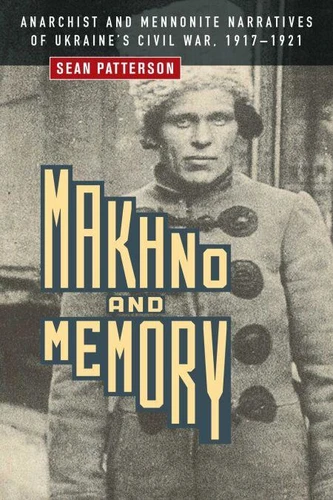
Makhno and Memory. Anarchist and Mennonite Narratives of Ukraine's Civil War, 1917–1921
Par :Formats :
Disponible dans votre compte client Decitre ou Furet du Nord dès validation de votre commande. Le format ePub est :
- Compatible avec une lecture sur My Vivlio (smartphone, tablette, ordinateur)
- Compatible avec une lecture sur liseuses Vivlio
- Pour les liseuses autres que Vivlio, vous devez utiliser le logiciel Adobe Digital Edition. Non compatible avec la lecture sur les liseuses Kindle, Remarkable et Sony
 , qui est-ce ?
Notre partenaire de plateforme de lecture numérique où vous retrouverez l'ensemble de vos ebooks gratuitement
Pour en savoir plus sur nos ebooks, consultez notre aide en ligne ici
C'est si simple ! Lisez votre ebook avec l'app Vivlio sur votre tablette, mobile ou ordinateur :

- Nombre de pages216
- FormatePub
- ISBN978-0-88755-578-7
- EAN9780887555787
- Date de parution09/04/2020
- Protection num.Digital Watermarking
- Taille5 Mo
- Infos supplémentairesepub
- ÉditeurUniversity of Manitoba Press
Résumé
Nestor Makhno has been called a revolutionary anarchist, a peasant rebel, the Ukrainian Robin Hood, a mass-murderer, a pogromist, and a devil. These epithets had their origins in the Russian Civil War (1917-1921), where the military forces of the peasant-anarchist Nestor Makhno and Mennonite colonists in southern Ukraine came into conflict. In autumn 1919, Makhnovist troops and local peasant sympathizers murdered more than 800 Mennonites in a series of large-scale massacres.
The history of that conflict has been fraught with folklore, ideological battles and radically divergent cultural memories, in which fact and fiction often seamlessly blend, conjuring a multitude of Makhnos, each one shouting its message over the other.
Drawing on theories of collective memory and narrative analysis, Makhno and Memory brings a vast array of Makhnovist and Mennonite sources into dialogue, including memoirs, histories, diaries, newspapers, and archival material.
A diversity of perspectives are brought into relief through the personal reminiscences of Makhno and his anarchist sympathizers alongside Mennonite pacifists and advocates for armed self-defense. Through a meticulous analysis of the Makhnovist-Mennonite conflict and a micro-study of the Eichenfeld massacre of November 1919, Sean Patterson attempts to make sense of the competing cultural memories and presents new ways of thinking about Makhno and his movement.
Makhno and Memory offers a convincing reframing of the Mennonite / Makhno relationship that will force a scholarly reassessment of this period.
A diversity of perspectives are brought into relief through the personal reminiscences of Makhno and his anarchist sympathizers alongside Mennonite pacifists and advocates for armed self-defense. Through a meticulous analysis of the Makhnovist-Mennonite conflict and a micro-study of the Eichenfeld massacre of November 1919, Sean Patterson attempts to make sense of the competing cultural memories and presents new ways of thinking about Makhno and his movement.
Makhno and Memory offers a convincing reframing of the Mennonite / Makhno relationship that will force a scholarly reassessment of this period.