
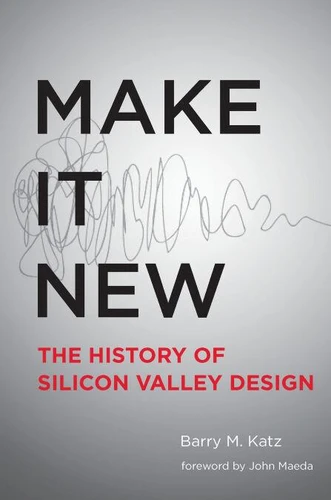
Make It New. A History of Silicon Valley Design
Par : ,Formats :
Disponible dans votre compte client Decitre ou Furet du Nord dès validation de votre commande. Le format ePub protégé est :
- Compatible avec une lecture sur My Vivlio (smartphone, tablette, ordinateur)
- Compatible avec une lecture sur liseuses Vivlio
- Pour les liseuses autres que Vivlio, vous devez utiliser le logiciel Adobe Digital Edition. Non compatible avec la lecture sur les liseuses Kindle, Remarkable et Sony
- Non compatible avec un achat hors France métropolitaine
 , qui est-ce ?
Notre partenaire de plateforme de lecture numérique où vous retrouverez l'ensemble de vos ebooks gratuitement
Pour en savoir plus sur nos ebooks, consultez notre aide en ligne ici
C'est si simple ! Lisez votre ebook avec l'app Vivlio sur votre tablette, mobile ou ordinateur :

- Nombre de pages280
- FormatePub
- ISBN978-0-262-33093-0
- EAN9780262330930
- Date de parution11/09/2015
- Protection num.Adobe DRM
- Taille4 Mo
- Infos supplémentairesepub
- ÉditeurThe MIT Press
Résumé
The role of design in the formation of the Silicon Valley ecosystem of innovation. California's Silicon Valley is home to the greatest concentration of designers in the world: corporate design offices at flagship technology companies and volunteers at nonprofit NGOs; global design consultancies and boutique studios; research laboratories and academic design programs. Together they form the interconnected network that is Silicon Valley.
Apple products are famously "Designed in California, " but, as Barry Katz shows in this first-ever, extensively illustrated history, the role of design in Silicon Valley began decades before Steve Jobs and Steve Wozniak dreamed up Apple in a garage. Offering a thoroughly original view of the subject, Katz tells how design helped transform Silicon Valley into the most powerful engine of innovation in the world.
From Hewlett-Packard and Ampex in the 1950s to Google and Facebook today, design has provided the bridge between research and development, art and engineering, technical performance and human behavior. Katz traces the origins of all of the leading consultancies-including IDEO, frog, and Lunar-and shows the process by which some of the world's most influential companies came to place design at the center of their business strategies.
At the same time, universities, foundations, and even governments have learned to apply "design thinking" to their missions. Drawing on unprecedented access to a vast array of primary sources and interviews with nearly every influential design leader-including Douglas Engelbart, Steve Jobs, and Don Norman-Katz reveals design to be the missing link in Silicon Valley's ecosystem of innovation.
Apple products are famously "Designed in California, " but, as Barry Katz shows in this first-ever, extensively illustrated history, the role of design in Silicon Valley began decades before Steve Jobs and Steve Wozniak dreamed up Apple in a garage. Offering a thoroughly original view of the subject, Katz tells how design helped transform Silicon Valley into the most powerful engine of innovation in the world.
From Hewlett-Packard and Ampex in the 1950s to Google and Facebook today, design has provided the bridge between research and development, art and engineering, technical performance and human behavior. Katz traces the origins of all of the leading consultancies-including IDEO, frog, and Lunar-and shows the process by which some of the world's most influential companies came to place design at the center of their business strategies.
At the same time, universities, foundations, and even governments have learned to apply "design thinking" to their missions. Drawing on unprecedented access to a vast array of primary sources and interviews with nearly every influential design leader-including Douglas Engelbart, Steve Jobs, and Don Norman-Katz reveals design to be the missing link in Silicon Valley's ecosystem of innovation.